

Green Testing (or sustainable software testing) focuses on reducing the environmental impact of testing processes by optimizing resources, lowering energy consumption, and minimizing waste throughout the software development lifecycle. It involves automating tests, reducing redundant environments, and, in some contexts, measuring software emissions to improve sustainability.Key Aspects of Green Testing
Energy Efficiency: Optimizing test environments and reducing the number of servers used to decrease energy consumption.
Automation: Using automated testing to reduce manual effort and energy consumption.
Resource Optimization: Efficiently utilizing testing tools and infrastructure, such as decommissioning unnecessary, redundant test resources.
Early Detection: Identifying defects earlier in the development cycle to reduce the need for multiple, resource-intensive re-tests.
Sustainable Practices: Focusing on reducing the carbon footprint and waste generated during the testing process.
GraphQL is a query language for APIs.GraphQL is an open-source data query and manipulation language for APIs, and a runtime for fulfilling queries with existing data. Unlike most query languages (such as SQL), you don’t use GraphQL to query a particular type of data store (such as a MySQL database). Instead, you use GraphQL to query data from any number of different sources. Developed GraphQL was developed internally by Facebook in 2012 before being publicly released in 2015 Advantages of GraphQL:
Apps using graphQL are fast and stable because GraphQL query return exactly what you need, Not More Not Less.
REST APIs require loading from multiple URLs, GraphQL APIs get all the data your app needs in a single request.
It allows developer to add new fields without impacting existing queries
Why it is important for a QA to know about GraphQL? As a QA we should be aware of new tools and technologies which are in high demand. GraphQL is quickly making its place in the industry. Several big companies like Facebook, GitHub, Airbnb, Atlassian, Paypal, Plural sight are listed as GraphQL customers on their Site.What can we test in GraphQL
Schemas
Resolvers
Performance tests
Static type checking
Unit tests Integration tests
End to End tests
Load testing
Content testing is a user testing process of evaluating and optimizing various elements of digital content, such as web pages, blog posts, emails, and other marketing materials, to improve their performance and effectiveness.Content testing helps you identify what elements of your content resonate most with your audience and what isn’t.Content testing typically involves creating multiple variations of a piece of content and exposing them to different segments of your audience. By doing this, you can gather data on how users interact with each variation and which one produces the desired outcomes.The results of content testing provide valuable insights into what aspects of your content are working and what needs improvement. By analyzing these insights, you can make data-driven decisions to enhance your content, boost user engagement, increase conversions, and ultimately achieve your content marketing goals.Content testing is an ongoing process that helps content creators and marketers refine their strategies and create content that best serves their audience and achieves business objectives.

Better than a generic video, see YOUR test, live, ready to show you what matters most: quality at scale.

Run only tests impacted by code changes. Get feedback faster.
Take this 7-question assessment to see where your QA team stands and get a plan for what to automate next.
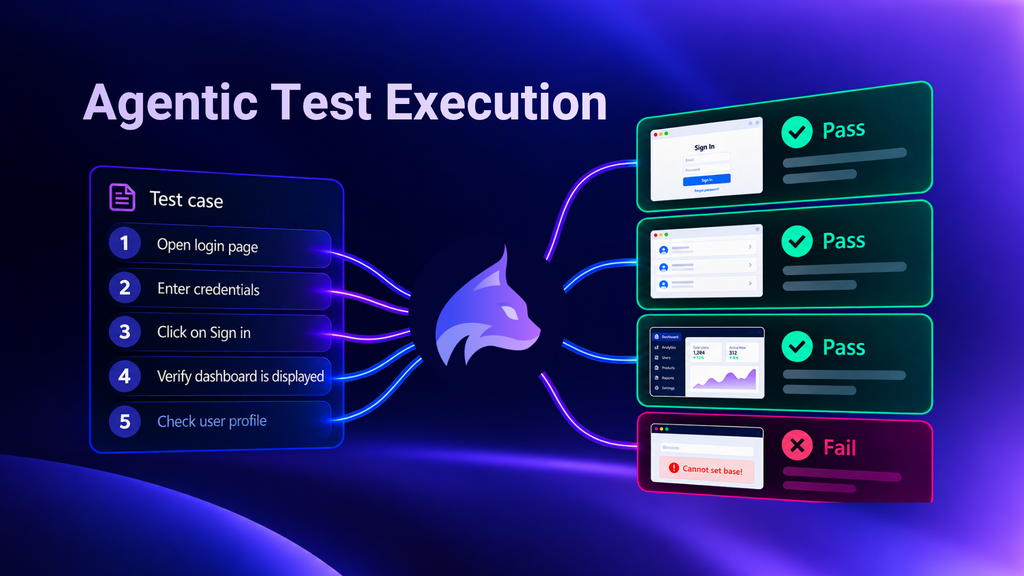
Lynqa executes your existing tests as written, no scripts or rewrites. Review step-by-step evidence. Start free.
