Certification discounts
26 Aug 2026

In this moment:
Mr Stephen P Platten
I've never viewed certifications as something you collect to prove you're a good tester. If a certificate becomes the goal, we've probably missed the point. For me, learning has always been about sharpening our judgement as testers, building that mental muscle. Testing isn't built on certainty; it's one built on making better decisions with incomplete information (doing what we can with what we have). That's one of the reasons I decided to complete several of the Ministry of Testing certifications.
What appealed to me wasn't simply the breadth of the syllabus, but the overall concept behind it. The courses repeatedly encourage you to question assumptions, think in systems rather than components, understand risk before writing tests, making sure to communicate evidence rather than opinion, and continuously reflect on your own testing practices. Those ideas align closely with how I already approach testing through my Stoic lens. We don't control whether software contains defects, whether requirements change or whether deadlines move. We do control how we observe, how we reason, how we prepare and how we respond.
The progression through Software Testing Essentials, Quality Engineering and the automation certifications also reinforced something I've believed for a long time: quality isn't created by tools, frameworks or processes alone. It is created by people applying sound judgement, I particularly appreciated that the automation pathway wasn't centred on becoming an expert in Selenium or any other framework. Instead, it focused on understanding why automation exists, how to make sensible tooling decisions, how to build maintainable test suites, with a goal to develop automation strategies that serve the wider goals of the organisation.
Perhaps the biggest impact these certifications have had on my career hasn't been opening doors because of the certificate itself, but reinforcing the way I think. They have strengthened my belief that testing is fundamentally a critical thinking profession. Whether I'm assessing AI systems, advising clients on quality strategy or helping teams understand risk, I find myself returning to many of the same themes these courses promote: curiosity over certainty, evidence over opinion, context over dogma and continuous learning over perceived expertise.
For me, that's the real value of these certifications is that they didn't change who I was as a tester; but they helped refine how I think as one. And in a profession where our greatest tool is our judgement, I struggle to think of a more worthwhile investment 🙂
- Stephen Platten
Investing in yourself shouldn't feel like a gamble. Sometimes it just needs to feel affordable.
See the discount or go Unlimited: ministryoftesting.com/membership

Diana Dromey
Events & Marketing Lead
she/her
Originally from Portugal but call Manchester UK my home.
I love meeting people, hosting friends and family, snowboarding, food, binge-watching sci-fi TV shows, photography, my family and life itself!
Open To
Review Conference Proposals
Sign in
to comment

AI writes code in minutes. Learn how vibe testing helps QA validate what changed before it reaches your users.
Explore MoT
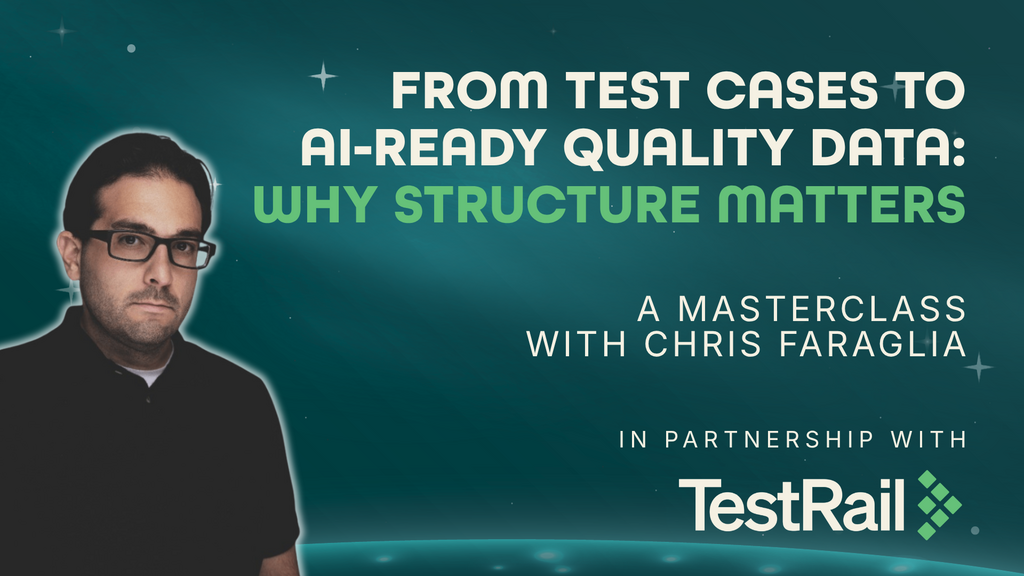
Learn how to structure and organize test management data as an AI-ready foundation that gives AI systems richer context for testing insights and workflows.
Boost your career in software testing with the MoT Software Testing Essentials Certificate. Learn essential skills, from basic testing techniques to advanced risk analysis, crafted by industry experts.
Into the MoTaverse is a podcast by Ministry of Testing, hosted by Rosie Sherry, exploring the people, insights, and systems shaping quality in modern software teams.
