Introducing a maturity model
03 Nov 2026
In this moment:
Simon Tomes
As part of my workshop at leading with quality I attempted to bring a new light to maturity models and dove into what they really do.
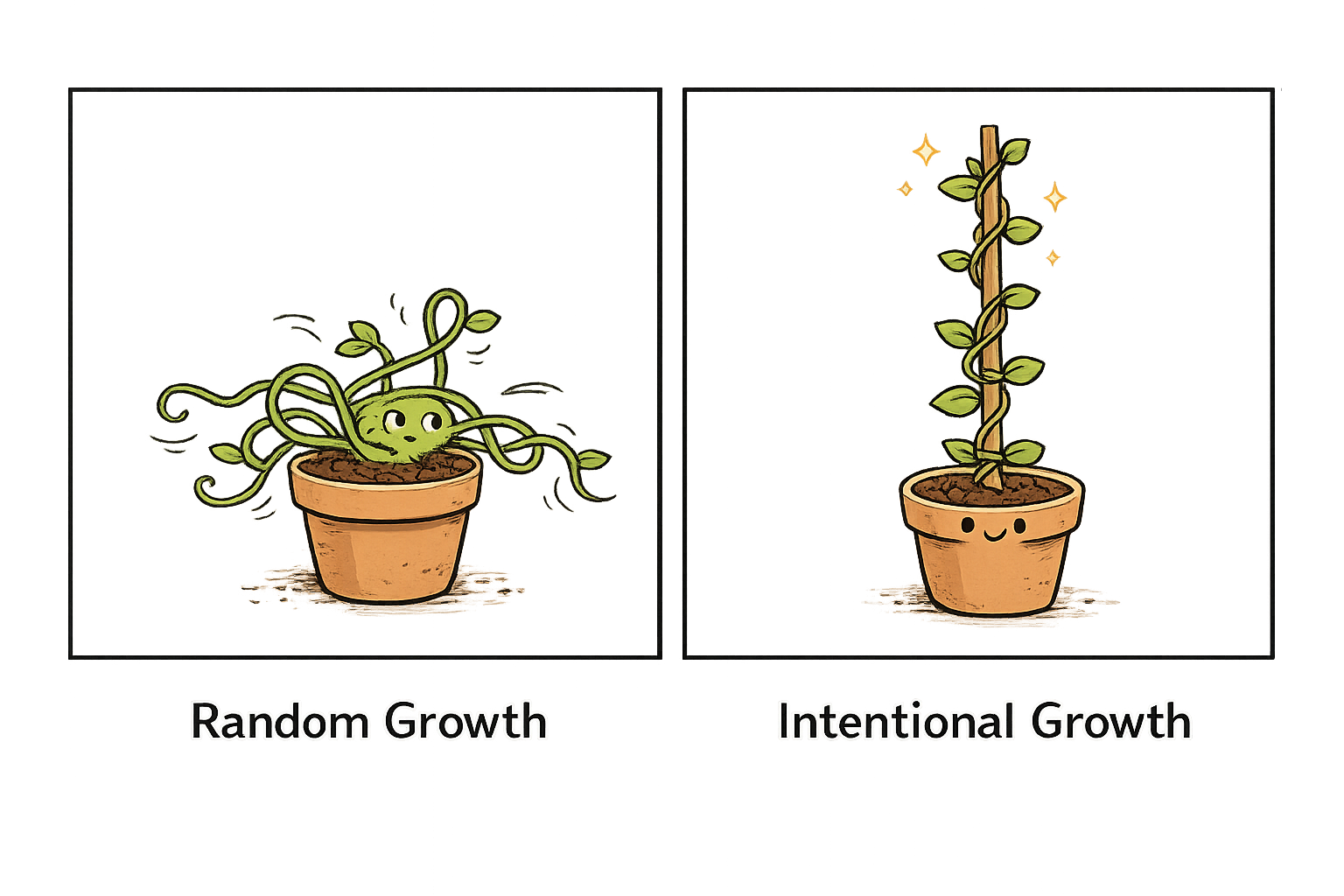
The first part of this is understanding that teams grow either by accident or by intention. Maturity is the support structure that helps growth happen in the right direction.
The second point to understand is that when we talk about maturity, we’re actually talking about awareness. Awareness of where we are, what’s working, and what’s holding us back. Most teams are so busy delivering, firefighting, adapting that they rarely stop to ask: How are we actually working? Maturity models give us a way to see our behaviour clearly, without judgement. They help us understand our patterns, our strengths, and the areas where we’re still reactive.
Understanding where you are as a team and where you need to be is a big part of every teams journey. And rather than looking at the top of the mountain and it seeming a daunting prospect to climb, a maturity model can be used to break the journey down into steps that you can use to navigate to the peek.
- Each level represents how consistently and consciously a team applies its practices.
- The goal is to help you understand what’s appropriate for your context.
- Maturity models help teams prioritise improvements instead of chasing trends.
- Maturity models break the journey down into smaller more manageable steps
Once we understand what a maturity model is, the next question is: Why does it actually help teams? The answers are surprisingly simple.
1. Maturity models makes the invisible visible.
2. Most teams have strengths, habits, and pain points that everyone feels but no one can quite articulate. A maturity model gives us a shared language to talk about those things clearly.
3. Maturity models can help shift from blame to curiosity Instead of saying "we’re bad at this," teams can say "We’re still reactive here, what would it take to become more proactive?" This change in language removes blame and replaces it with curiosity.”
4. It helps teams align. Without a model, everyone has a different mental picture of how the team works. With a model, everyone sees the same map, and that makes improvement collaborative.
5. For leaders and coaches, maturity models are incredibly useful. They help us focus on the correct next step, not just the loudest problem or trend. They turn improvement from guesswork into guided growth.
So the real power of maturity models isn’t the levels. It’s the clarity, the alignment, and the shared understanding they create.

Megan Ozanne
QA Team Lead
I love all things test especially exploratory testing, I focus on building out automation first QA teams.
Open To
Teach
Speak
Hiring
Podcasting
Write
Sign in
to comment

With servers in >250 cities around the world, check your site for localization problems, broken GDPR banners, etc.
Explore MoT

Tue, 19 Jan 2027
Test Forward is one afternoon at Station F with the QA and engineering people closing that gap in their own teams.

Learn the Modern Testing principles that will help the whole team deliver high quality software

Into the MoTaverse is a podcast by Ministry of Testing, hosted by Rosie Sherry, exploring the people, insights, and systems shaping quality in modern software teams.
