

Partially back from a two month hiatus - apologies this took forever but it never left my backlog!From the original moment: AMA about Epistemology - the practice of testingAdy asked: "If quality pr...




With SQEC now fully live, the community swaps stories about new roles, flaky tests, accessibility audits, and why shared language, pairing, and “being the duck” can make quality work easier.
QA usually owns the automated tests. When a company mandates a level of automation, QA spends a part of their time growing the number and scope of the automated tests. Over time, maintenance of these tests can become expensive, and most of a QA teams time can be spent maintaining the existing automation while adding all new tests into the automation. This becomes a perpetual treadmill of building test automation that can take time and energy away from other valuable QA tasks such as design and specification review, functional testing, exploratory testing, interactive testing, etc. "Now, here, you see, it takes all the running you can do, to keep in the same place" - The Red Queen, Through the Looking Glass



Master the RICCE framework to transition from manual testing to AI-augmented automation by leveraging structured prompting and the Playwright MCP agent ecosystem.
Implement the Playwright Page Object Model (POM) to build maintainable, resilient test suites by centralizing page interactions and separating them from test logic.
A pattern of design commonly used and conceptually intuitive that is otherwise known to be ineffective, sub-optimal, or counter-productive to the goal.Examples include Spaghetti Code, the Testing Ice Cream Cone, Code Coverage Mandates, Unfalsifiable Test, Skip The Test, and Watchmen Tests
Cultivate professional trust and accountability by using detailed documentation to demonstrate due diligence and quantify risk for stakeholders.
Testing work that looks impressive, generates artifacts, and fulfills metrics while providing little value. Performative Testing is testing effort devoted to tasks make it appear as if QA is doing work while often ticking off mandated checkboxes.End-to-End test automation is an example. There is often an outsized focused on E2E tests as they look impressive visually, yet they are expensive to write and maintain while finding very few real bugs. Meanwhile Functional and Exploratory ("manual") testing efforts provide high value but are difficult to quantify and therefore can be neglected or deprioritized. "Looks busy. Feels productive. Delivers nothing" - Rahul Parwal

"AI likes to get it's sticky tentacles into all your systems"Talking with Rosie as part of the Into the Motaverse podcast, I made a passing comment on the use of AI that really stuck with the both ...
Inspired by the following challenge: https://www.ministryoftesting.com/moments/create-a-moment-ask-motaverse-anything/
Often we're asked 'what does QA do?' It should be a simple answer, and yet we'...
Recently Rosie covered the Digg shut down. Digg placed the blame on the prevalence of AI Agents flooding the internet with an endless stream of derivative content while at the same time boosting th...
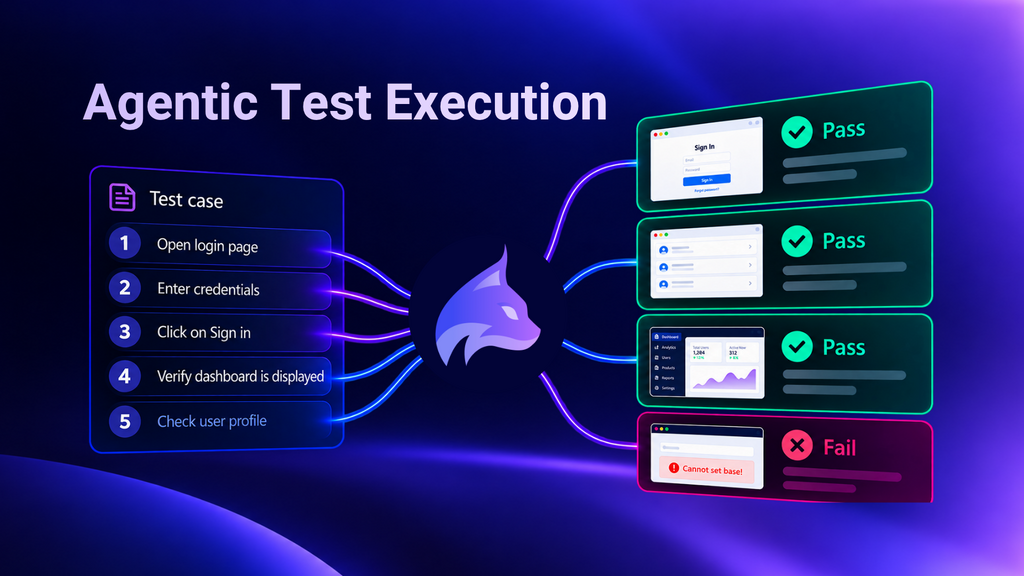
See how Lynqa runs your existing tests as written, captures step-by-step evidence, without code or no-code.
Team of 5 or fewer? TestRail now starts at $22/user. Test case management, defect integrations, reporting, and more.

Get enterprise service virtualization for complex systems, realistic behavior, and AI-assisted workflows.

There are countless ways to show up and contribute. Which one will you try today?
