
Course (1)
Glossary Term (39)
Insight (16)
Certification (2)
Collection (6)
Session (6)
Moment (24)
Link (5)




Obfuscation is the process of replacing sensitive information with data that looks like real production information, making it useless to malicious actors. People often confuse Anonymisation & Obfuscation, they are both data protection methods, but they differ in reversibility, purpose, and legal standards. Anonymisation permanently removes all personal identifiers from a dataset so that individuals can no longer be identified. Obfuscation alters the data's format or replaces it with fictional values (using methods like masking, encryption, or shuffling) to hide original information, though some forms remain reversible or readable by the systemKey Differences checklist ㊙️
Reversibility: Anonymisation is permanent and irreversible; obfuscation can often be reversed by authorised parties using a key or code.
Primary Goal: Anonymisation aims to completely sever the link to an individual for strict privacy compliance; obfuscation aims to deter casual observation or protect data during development and testing.
Regulatory Status: True anonymised data is exempt from strict laws like the GDPR because re-identification is impossible; obfuscated data is often still regulated as sensitive or personal data.
Use Cases: Anonymisation fits open data sharing and public research; obfuscation fits software/quality engineering, internal analytics, and staging environments.


Anonymisation is the process of irreversibly removing or encrypting personal identifiers, such as names, addresses, and ID numbers from a dataset. The goal is to protect individual privacy while allowing the remaining data to be safely used for software testing.How it works: It involves techniques like generalisation (broadening details), masking (redacting), or adding random "noise" to the data. True anonymisation is irreversible. Once processed, it is nearly impossible to trace the data back to an individual.
Why it matters: Anonymised data falls outside the scope of strict data privacy laws (such as the EU GDPR) because it no longer relates to an identifiable person.



Velocity is a metric used to track the rate of progress in software development. For testers, the term carries two distinct meanings that impact how quality and timelines are managed.1. The Agile Metric (Operational)In standard Agile practices, velocity is the total number of story points a team completes during a sprint.For Testers: It serves as a capacity planning tool. A spike in velocity without a corresponding increase in team size often signals "testing debt," where speed is prioritised over thorough validation or regression testing.2. The AI/Market Narrative (Strategic)In the current "AI-first" landscape, velocity refers to the overall speed of deployment and organisational pivot.For Testers: This is often viewed critically as "speed over direction." High organisational velocity can lead to "accelerated chaos" if the testing infrastructure - automated suites, environments, and safety rails - isn't scaled to match the increased deployment frequency.
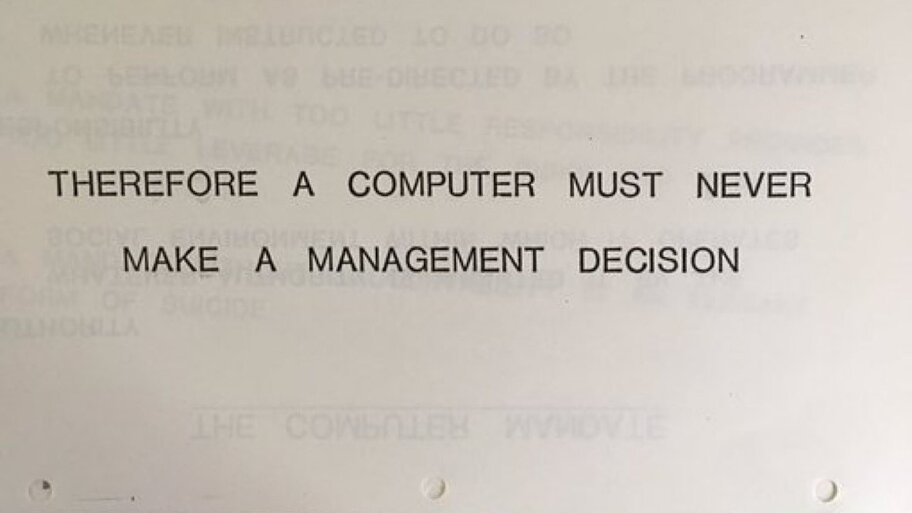
This is from an IBM presentation In 1979

A JNTX system is a specialised software architecture used in AI-native and agentic platforms. Instead of relying purely on traditional, hard-coded logic, it deploys features and functionality using a combination of autonomous agents and prompts. For software testers, this means shifting from validating deterministic code to validating probabilistic interactions driven by Large Language Models (LLMs).As JNTX platforms scale, QE's or QA teams frequently encounter a major architectural risk known as "prompt spaghetti." This occurs when integration logic becomes overly complex, and developers attempt to handle system parsing and routing directly within natural language prompts.
For a tester, prompt spaghetti results in:
Highly brittle systems that are nearly impossible to reliably automate.
Non-deterministic outputs that cause widespread flaky tests.
A massive increase in edge cases, hallucinations, and unhandled exceptions.
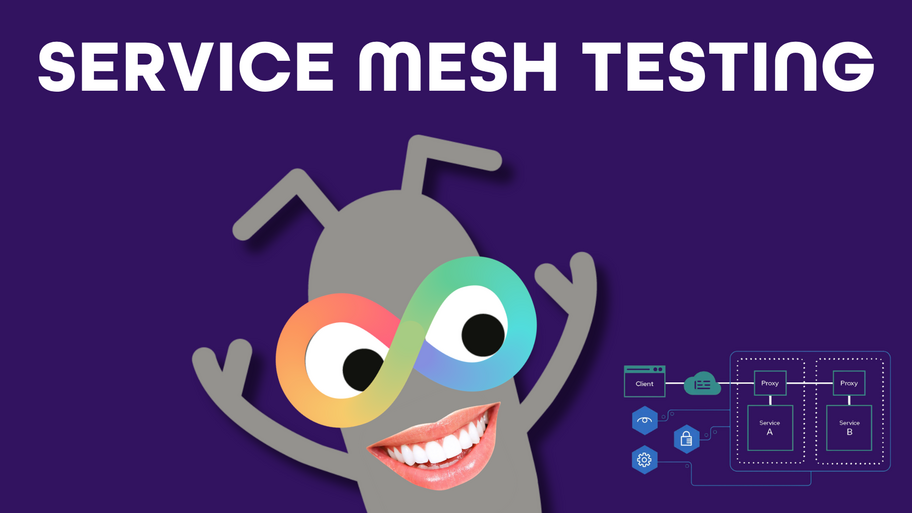
A service mesh is a dedicated infrastructure layer that controls how microservices share data with one another. It uses "sidecar" proxies to automatically handle networking, security, and monitoring so software engineers don't have to build those features into the application code. Service Mesh Testing is the practice of validating how microservices interact by using the network layer that connects them. Instead of testing a single service in isolation, you use the service mesh to run "what if" scenarios and safety checks on the live connections between services.
Think of it as a flight simulator for your software network that enables several advanced testing strategies:
Canary Testing: Gradually routing a small percentage of users (e.g., 1%) to a new update. If the metrics look good, you "dial up" the traffic; if not, you roll back instantly with minimal impact.
Traffic Shadowing (Mirroring): The mesh creates a "ghost copy" of real user traffic and sends it to a test version. This allows you to see how new code handles real-world stress and data without the users ever knowing or being affected.
Fault Injection (Chaos Engineering): Programmatically forcing the network to act as if it is slow or as if a service has crashed. This confirms the system is resilient—staying upright even when individual parts fail.
Observability "X-ray": Provides a real-time map of every conversation between services. If a request fails, the mesh shows you exactly where the chain broke, eliminating the guesswork in debugging.
Why it matters: Traditional testing often happens in a "lab" (staging environment) that never quite replicates the real world. Service mesh testing allows teams to test against real-world conditions with granular control, significantly reducing the risk of deployment failures.
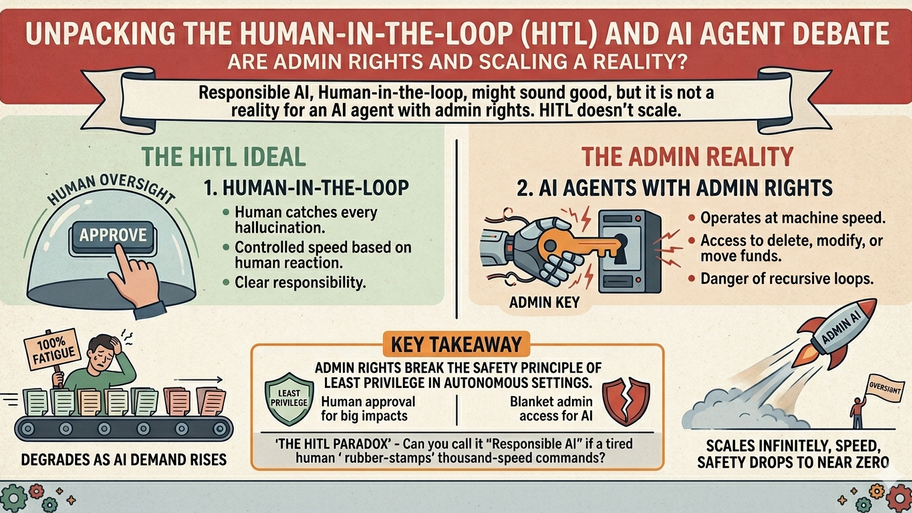
You cannot claim a system is or uses "Responsible AI" just because there is a human button-pusher. If the system is designed to move faster than that human can think, how do you prevent your busine...

Software Engineer in Test, a term used more in Europe that the UK.See also SDET.https://www.ministryoftesting.com/software-testing-glossary/sdet-software-development-engineering-in-tests

Canary Release (noun 😉)A real world production deployment strategy that involves rolling out a new software version or feature to a small, select subgroup of users before making it available to the entire user base. Often incrementally. This can be used as an early warning system (risk mitigation). Incremental rollouts this way, can enable automated roll backs if paired with monitoring tools if predetermined error rates are detected (the canary part).Unlike staging environments, a canary release tests how the update interacts with actual production data and diverse user behavior.

A business model where humans and intelligent AI agents work together to improve efficiency and decision-making.Unlike traditional automation, agentic AI doesn’t just follow rules - it can reason, adapt, and act autonomously. These AI agents handle complex, multi-step tasks through a continuous cycle of perception, reasoning, and action, enabling dynamic problem-solving.For quality engineers and testers, this means:
AI agents assist in testing and quality processes, reducing repetitive work.
Humans focus on strategic, creative, and high-value activities.
Potential impact - it is proposed that there will be better employee experience, faster delivery, and improved customer satisfaction.

Manage your entire QA lifecycle in one place. Sync Jira, automate scripts, and use AI to accelerate your testing.
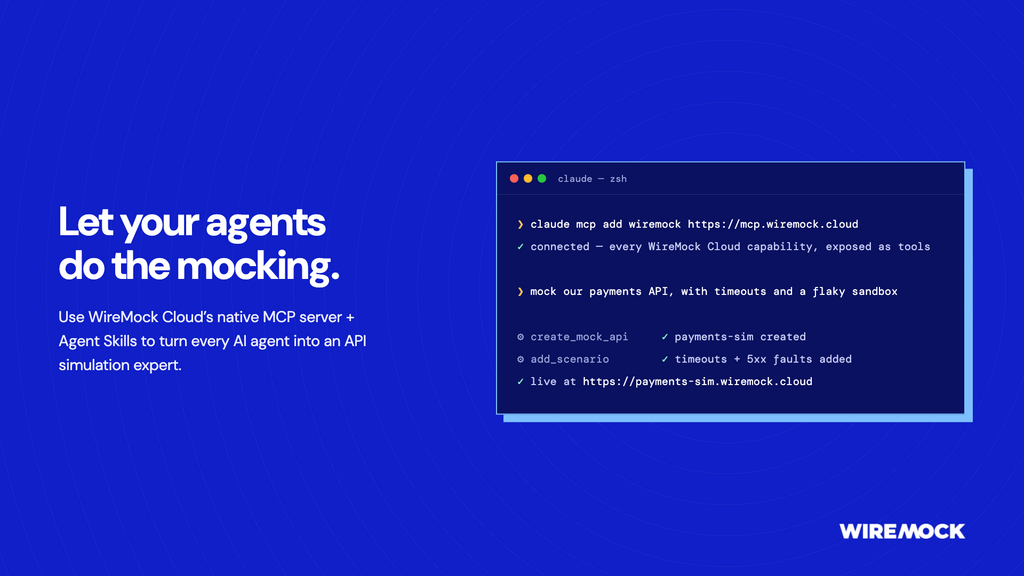
Let agents spin up stateful API simulations so they can deliver better work, without hitting your live endpoints.

Get enterprise service virtualization for complex systems, realistic behavior, and AI-assisted workflows.

MoTaCon is coming, have you got your ticket yet?
