
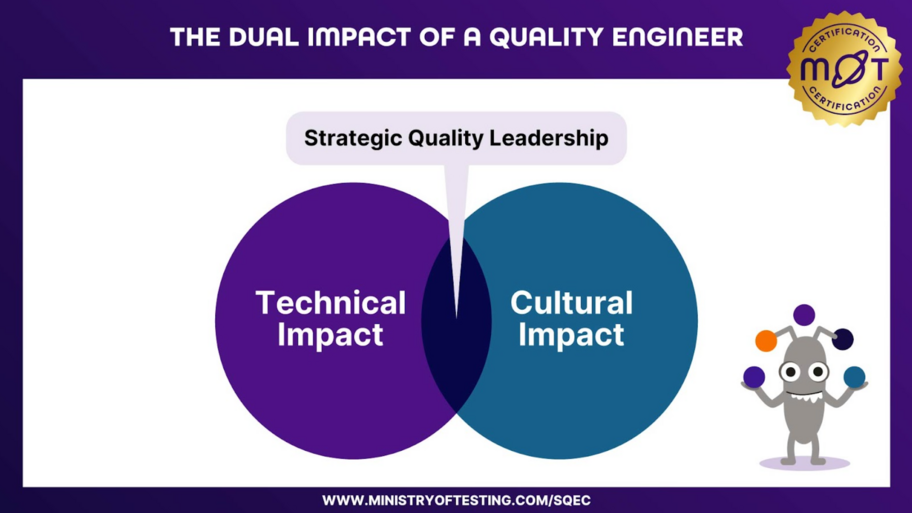

Strategic quality leadership is the ability to influence, shape, and elevate both the technical and cultural dimensions of software delivery so that quality becomes a shared, systemic, and continuously improving capability.
It is characterised by:
A long‑term, system‑level perspectiveImproving processes, reducing waste, designing for quality - not just testing for it.
A focus on cultural enablersCollaboration, psychological safety, shared ownership, transparency.
The ability to align strategy, delivery, and behaviourConnecting quality goals to organisational outcomes and customer value.
Technical credibility and coaching influenceAdvancing automation, testability, observability, and engineering excellence.
Commitment to continuous improvementEmbedding root cause analysis, learning and improvement loops into the system.
Strategic quality leadership in practice:Strategic Quality Leadership is demonstrated when a Quality Leader elevates both the technical and cultural capabilities of a team to improve software quality and delivery outcomes. In practice, this means moving beyond testing tasks to shape system‑level behaviours, influence decision‑making, and create sustainable quality improvements. In nutshell, strategic quality leadership turns quality from an activity into a team or organisational capability, and from a phase in the product development process into a shared mindset that drives better delivery and customer outcomes.
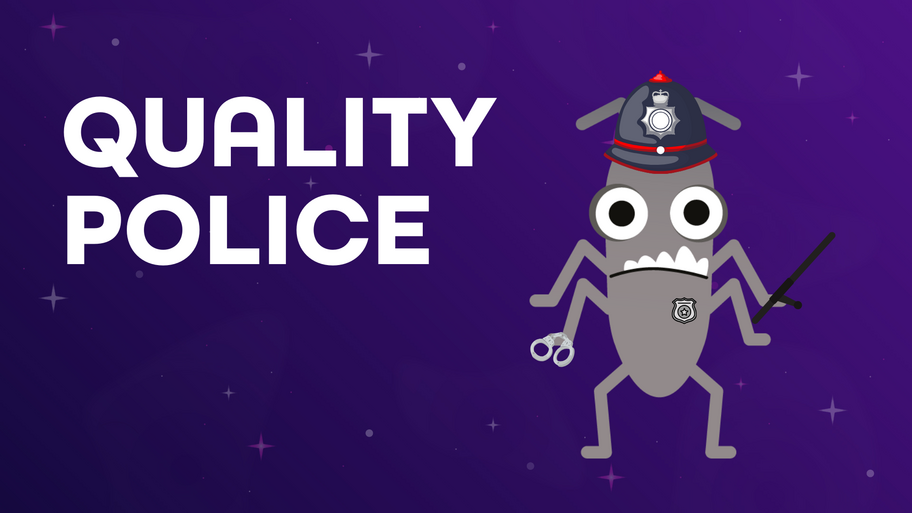
A quality police dynamic can occur when teams become divided, and Quality Engineers are positioned, explicitly or implicitly, as the people who “approve” work. In this situation, they can become de facto gatekeepers rather than collaborators, which may create an “us vs them” dynamic in teams, lead to defensive behaviour around incidents and bugs, and reduce psychological safety.
Impact
Developers and engineers may disengage from quality ownership.
Quality Engineers may be blamed for missed issues.
Collaboration may decrease rather than increase.
Root cause This may happen when shared ownership is talked about in teams, but accountability is not truly shared. It can be noticeable in teams where authority remains centralised while responsibility is supposedly distributed.


Your mission [as a quality engineer] is to help your team build better software by making quality visible, valued, and shared.



Shift-left is a concept in software development that is commonly understood as an approach that encourages software development teams to engage testers, and introduce quality focused activities, such as testing much earlier in the SDLC.Quality focused activities in the context of “shift-left” can include, for example - testing features and product ideas in the planning phase, analysing requirements and specifications before a single line of code is written, engaging earlier with developers and other stakeholders to clarify requirements, goals and expectations of a feature or product under development etc.

Getting tests that catch real failures is the hard part. Join us on Oct 8 and see how it's done.

Cases, runs, evidence, requirements, and releases in one AI-powered platform for authoring, execution, and automation.
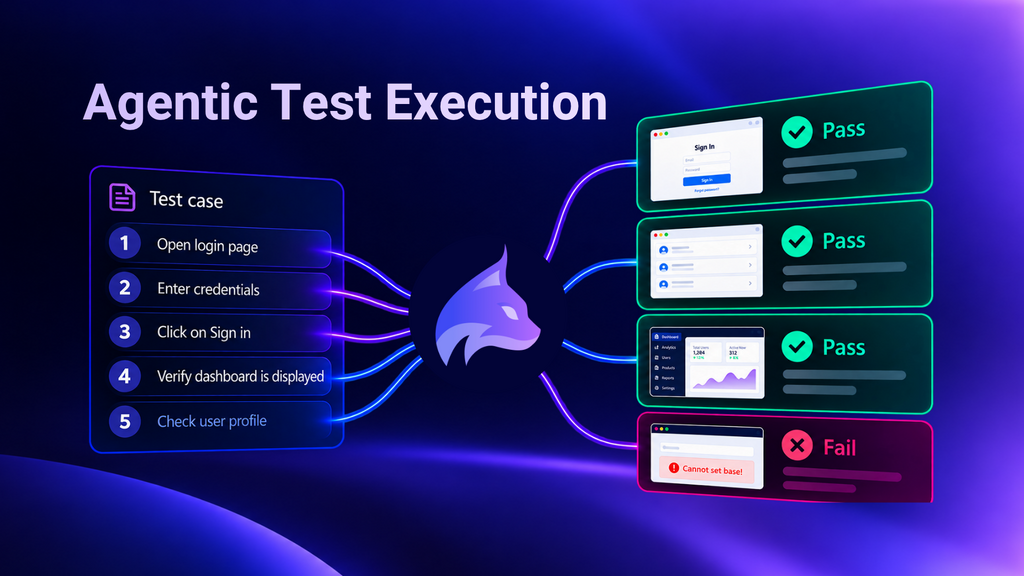
See how Lynqa runs your existing tests as written, captures step-by-step evidence, without code or no-code.

How are teams like yours balancing speed, quality, security, and AI in 2026? Download your copy and get real insights.
