


What is usability testing? Usability testing assesses the effectiveness with which users can perform the necessary tasks within the software, and whether there are any unnecessary obstacles which prevent them from doing so. Usability can be thought of as being comprised of five quality components:
Learnability: How easy is it for users to accomplish basic tasks the first time they use the product? Do they make any errors? Do they get frustrated with the application?
Efficiency: Once users have learned the design, how quickly can they perform tasks? If they struggle with what should be a straightforward task, why is this? Can the number of clicks required be reduced?
Memorability: When users return to the design after a period of not using it, how easily can they reestablish proficiency?
Errors: How many errors do users make, how severe are they, and how easily can they recover from the errors?
Satisfaction: How pleasant is it to use the design? Does the user like using the application?
Do you have any examples of usability testing? For example, you could ask users to find a specific item in a product catalogue, create a purchase order, or complete a checkout process. While they carry out these tasks, you would observe where they struggle, whether they make any errors, and how satisfied they are with the process. Their feedback and behaviour would highlight any obstacles preventing smooth and efficient task completion. Why is usability testing important? A product could meet all the predefined Acceptance Criteria set by the business, yet when end users get their hands on it, they find the product experience painful to use. Usability testing helps uncover these obstacles, allowing the development team to remove or reduce them, making the product more efficient, effective and satisfying to use. What are the challenges with usability testing? One of the biggest challenges is that the development team will always have a level of technical competence and product knowledge that the user base cannot be guaranteed to have. This makes it extremely difficult for developers and testers to evaluate usability from the same perspective as a real user. Another challenge is distinguishing usability testing from other activities like User Acceptance Testing (UAT) — which focuses on whether the product meets business needs — and A/B testing — which compares the performance of two versions of a feature. Usability testing is specifically about identifying obstacles to effective and efficient task completion and improving the overall experience for users.

So what is security? Security is protecting against attackers who illegally exploit vulnerabilities in your system for their own purposes. Attachers might want to steal data for financial gain, stop customers being able to buy from you or cause damage to your reputation. They could be internal or external to your company. There are different types of security, for example, application security, network security, or security of the physical environment. Like your office building or work area.
Have you got any examples?An example of application security is input sanitization, which can help protect against cross site scripting, and SQL injection attacks. A secure system should also not allow users to access features that they aren't meant to see, or unauthorized users to log on at all. An example of network security might be a firewall controlling traffic to and from the internet.
What's the value of good security? Ensuring we build secure systems means our data and our customer's data is protected and it cannot be misused by attackers. Cyber attacks which exploit insecure systems can cost businesses a lot of money and reputational damage.
And what are the pitfalls?Security often gets forgotten or left until the end when it's too late to fix. In the same way, no non trivial application is bug free, no application can be a hundred percent secure. If you want to practice security testing techniques, you must be careful to only do so on sites or applications where you have permission.
Genuine self-healing builds multi-attribute UI models. Here’s what to check before trusting the label.
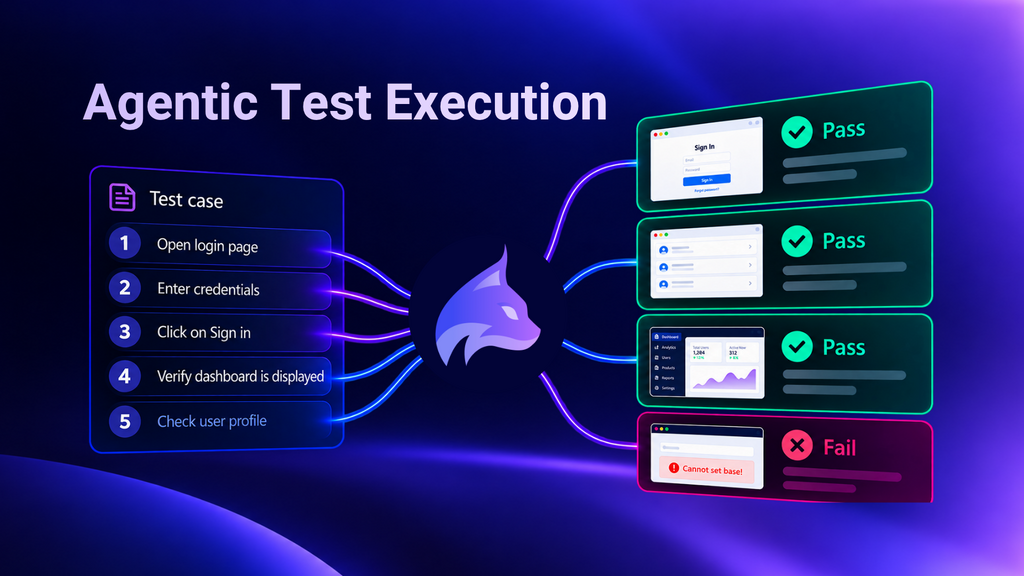
See how Lynqa runs your existing tests as written, captures step-by-step evidence, without code or no-code.
Take this 7-question assessment to see where your QA team stands and get a plan for what to automate next.

Get enterprise service virtualization for complex systems, realistic behavior, and AI-assisted workflows.
