
Glossary Term (246)
Insight (85)
Collection (58)
Session (86)
Moment (518)
Newsletter Issue (50)
News (57)
Link (1385)


Definition: Short-form blog posts published within the MoTaverse platform, used by members to share updates, reflections, or content without needing a longer article format. So what? Like Observatory, this is a platform-specific feature name rather than an industry term, it illustrates a lightweight, collaborative and community way for members to keep publishing and building their profile. Example: A member posting a steady stream of short updates about their work, prompting others in the community to read and respond to each one.

Definition: A feed within the MoTaverse platform where members share links to articles, resources, or content they've found valuable, earning recognition when others click through and engage with the shared link. So what? This is a MoT-specific platform feature rather than a general testing or tech term, so it's unlikely to be a meaningful glossary entry for an external audience, though it's worth noting as a mechanism that encourages knowledge sharing and rewards curation. Example: A member shares an article about differing personal working styles, and both the sharer and anyone who reads it via the link earn recognition for the interaction.

A discussion format involving a small group of people, rather than just two, exploring a topic together in a conversational, non-scripted way.In the MoTaverse we host roundtables in various formats, recently introducing them online. So what? This format sits between a one-on-one conversation and a full talk, giving more people a chance to contribute perspectives on a topic in a relaxed setting. Example: A small group session where a handful of practitioners talk through a shared theme together, similar in spirit to a two-person conversational format but with more voices in the room. Editorial note: This definition has been inferred from how the term was used in the source material.

A very short, informal talk format lasting around ninety-nine seconds, used as a low-pressure entry point for people who haven't spoken publicly before. This short talk format started in the early days of the MoTaverse at TestBash (now MoTaCon) and has continued to live on at conferences, chapter and virtual events.It has also expanded beyond the MoTaverse and inspired external communities to adopt the same approach. So what? The short format removes much of the pressure associated with public speaking, making it an accessible first step that can build confidence and lead to further involvement, such as writing or longer talks. Example: Someone giving a ninety-nine second talk at a conference as their very first public speaking experience, which later leads them to contribute further content and encourage others to get involved too.

A relaxed, conversational format practised in the MoTaverse where a guest and host discuss a topic together, without a formal presentation or script, as an alternative to a solo talk. So what? This format lowers the barrier to contributing for people who find preparing and delivering a talk alone intimidating, especially newer or less experienced speakers, while still producing valuable shared insight. Example: A first-time contributor recording a relaxed back-and-forth conversation, which then goes on to inspire other new speakers to get involved in similar ways.

The simplest working version of an idea, used to test whether it's worth building out further before investing in a full product. So what? A single prompt or skill built for one person can act as a lightweight MVP, revealing whether the underlying idea has real value before deciding whether to build it properly into a platform. Example: Asking an AI assistant to generate a CV from someone's community profile started as a quick experiment, but is now being considered as a genuine feature to build into the product itself. Editorial note: This definition has been inferred from how the term was used in the source material.

A place to log and track work that isn't being addressed immediately, often used when a small issue can't be fixed on the spot. So what? Some teams deliberately avoid logging every issue as a ticket, instead resolving small things through direct conversation with developers and only reaching for the backlog when something turns out to be bigger than expected. Example: A tester offers a developer the choice of a quick five minute fix with no ticket, or logging it to the backlog if it turns out to be more involved than first thought. Editorial note: This definition has been inferred from how the term was used in the source material.

A systematic skew in a dataset that causes a model trained on it to produce outputs that are consistently inaccurate, unfair, or unrepresentative for certain inputs, groups, or contexts. Data bias can originate from how data was collected, labelled, filtered, or weighted and is often invisible until the model is tested across a broad range of conditions.So what? Data bias is one of the most consequential quality risks in AI systems because it is baked in before a line of application code is written. Testing for it requires deliberate coverage of underrepresented groups, edge cases, and real-world distributions, not just happy-path inputs.Examples: A hiring tool trained predominantly on CVs from male candidates learns to downrank applications from women, not because of an explicit rule but because of patterns in the training data. An image recognition model trained on photographs taken in high-income countries performs poorly on images from lower-income contexts where lighting conditions, camera quality, and subject framing differ.

The dataset used to teach a machine learning model by exposing it to examples from which it learns statistical patterns, relationships, or classifications. The composition, quality, and representativeness of training data directly shape what a model can and cannot do well.So what? For testers working with AI systems, training data is a primary source of risk. Gaps, skews, or errors in training data manifest as model failures that cannot be fixed through code alone they require the data itself to be identified, understood, and addressed.Examples: A sentiment analysis model trained on English-language product reviews will perform poorly on reviews written in other languages or registers. A fraud detection model trained only on historical fraud patterns will fail to catch novel attack types not present in its training set.

A feedback dynamic in which a dominant mode of knowledge production becomes self-reinforcing over time, progressively narrowing the diversity of human expression and cultural output. So what? When AI systems trained on existing dominant knowledge corpora are used to produce new content at scale, they can amplify existing biases and crowd out minority or non-mainstream perspectives, gradually reducing the overall range of knowledge available for future training and use. Example: If generative AI tools trained on predominantly Western, English-language content are widely adopted for content production globally, they risk displacing local knowledge traditions and linguistic diversity from the digital landscape over successive generations of model training.

The process by which knowledge that was produced in or contributed to the public domain becomes controlled within proprietary systems, limiting the ability of researchers, communities, or the public to access, audit, or build on it. So what? LLM companies classify training datasets, model architectures, and optimisation techniques as trade secrets, extending enclosure beyond traditional intellectual property mechanisms and restricting public-interest research into bias, representational gaps, and data provenance. Example: A researcher attempting to audit a commercial LLM for representational bias cannot access the training data because it is classified as a trade secret, even though much of that data originated from publicly funded or volunteer-produced sources.

Languages that are significantly underrepresented in computational datasets and NLP research, typically because the volume of digitised text available for training is small relative to dominant languages such as English. So what? Over 90% of the world's languages are classified as low-resource; this imbalance means AI models perform unevenly across linguistic and cultural contexts, producing representational injustice for speakers of those languages. Example: A multilingual model trained predominantly on English-language web data may perform well for English speakers but generate unreliable or culturally inappropriate outputs for speakers of languages with limited digital corpora.
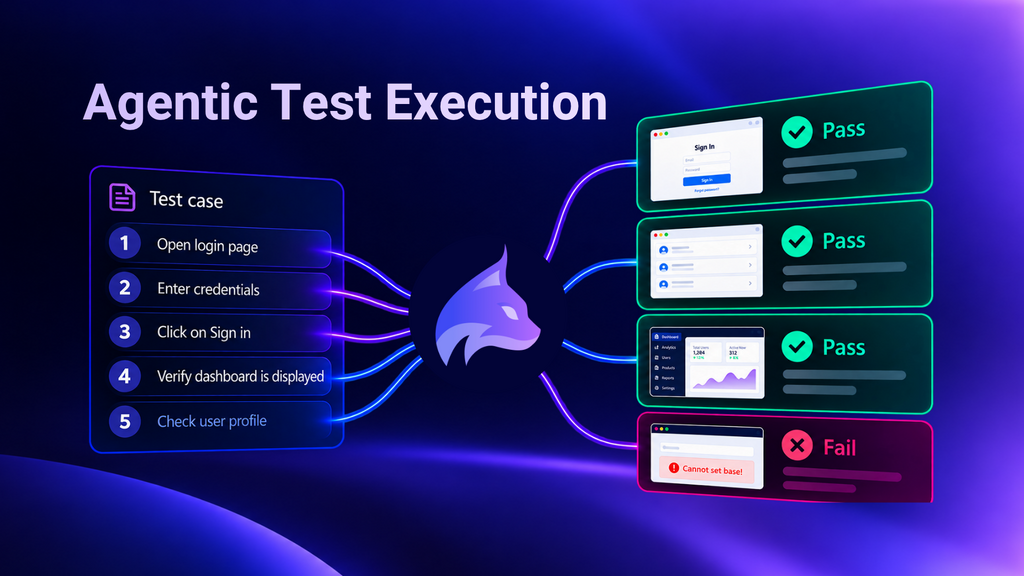
See how Lynqa runs your existing tests as written, captures step-by-step evidence, without code or no-code.
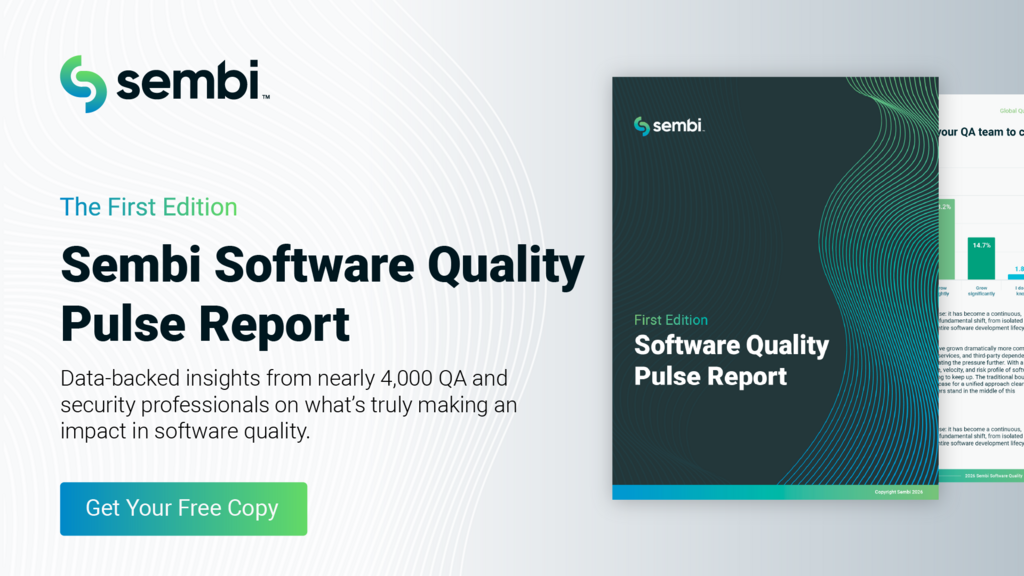
How are teams like yours balancing speed, quality, security, and AI in 2026? Download your copy and get real insights.

Cases, runs, evidence, requirements, and releases in one AI-powered platform for authoring, execution, and automation.

With servers in >250 cities around the world, check your site for localization problems, broken GDPR banners, etc.
