

"First we borrow the idea of personas from exploratory testing. We build a suite of different personas that represent different elements of our user base. We use those personas to build automated persona driven testing. This takes our well-defined personas and uses them to guide an LLM to act like those users. On top of that, you feed the persona a goal and set it run against your chat interface until it achieves its goal, or x turns have completed."So what? A few hand-written prompts only cover what the author thought of; synthetic personas generate conversations closer to the creative, messy ways real users behave, broadening coverage of an AI product. Synthetic inputs are a supplement to real ones, not a replacement.Examples: Defining an impatient persona who gives only half the information and switches topic partway through; running one persona with the goal of booking a refund until it succeeds or hits ten turns.

"A curated set of inputs, each with the expected behaviour or reference answer that your team has agreed represents good. You run the system against it, score the results (with code, judges, humans, or a mix) and get numbers you can compare release over release."So what? When you cannot define a single correct response, a golden dataset gives a stable baseline to tell whether a change (a new model, an edited prompt, altered retrieval) improved things or made them worse. Examples: Building a few hundred cases from production traces, support tickets and expert-authored hard cases, tagged by category so results can be sliced; holding back a portion of cases so prompt tuning does not overfit to the whole set.

The policies, processes, and guardrails put in place to ensure that code, experiments, and tools produced across a team meet standards of safety, consistency, and reliability, especially as AI lowers the barrier to building.
The question is no longer about engineering capacity, but Governance. The teams that win will be those that create the safest “Playgrounds”. The teams that win won’t write the most code — they’ll create the safest environments for everyone to build in.

Short-lived, AI-generated code designed to be deleted after use, typically for running experiments such as A/B tests on a component or call-to-action, with Engineering providing guardrails through a component library and code review.

AI-generated code used for internal validation and testing core logic during the "can we even do this?" phase. It lives in a sandbox and never reaches production; if it works, the learnings are handed to Engineering to be rebuilt properly.

At a practical level, dependency injection is a process that is possible thanks to design choices allowing a piece of code to have its dependencies—like database values or external APIs—"injected" into it from the outside, rather than creating or fetching them itself. This allows for tests to have a known state ahead of running without interacting with the whole system.The Quality Perspective:Dependency injection is about using the seams in the software to control state ahead of completing a test. It is an architectural prerequisite for building testable, resilient systems.When code is tightly coupled and can only create its own dependencies, testing becomes a multi-step process just to configure the scenario you want to test. Being forced to interact with the entire system at once leads to slow, brittle test suites that bottleneck the delivery pipeline. Dependency injection solves this by using intentional seams in the architecture to create the desired start state for the test.

Strategic Friction are the intentional bottlenecks we design into our process specifically where risk lives:
Architecture Guardrails: If AI can spin up a microservice in minutes, we need senior-led standards that ensure it doesn’t become a distributed nightmare.
Deep-Dive Peer Reviews: Shifting the focus from “Does this look right?” to “How does this break the system?”
Automated Risk Gates: Designing smarter CI/CD checks that trigger deeper scrutiny when AI-generated boilerplate touches critical paths like security or payments.
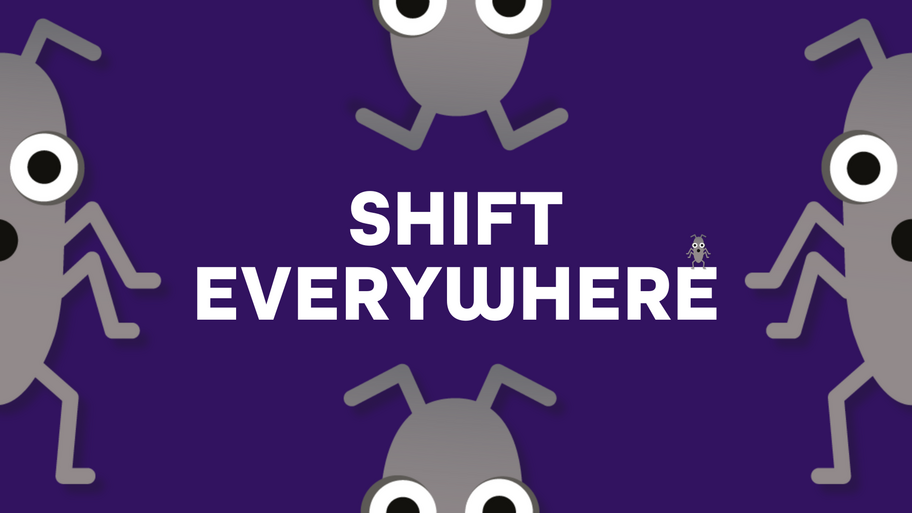

Shift everywhere encompasses and guides both shift left and shift right actions. This core approach promotes the integration of quality throughout the entire SDLC, rather than confining it to specific phases. It embodies a holistic view of quality, recognising that every step, from ideation through to ongoing maintenance and monitoring, is an opportunity to build quality in and reduce risks. This continuous integration of quality practices makes Continuous Quality an achievable ambition of Quality Engineering. QE professionals champion this approach to ensure quality is continuously considered and engineered.


Quality engineering is very much based around having a quality engineer in each of our product engineering teams, and they are the quality expert. So they know about testing. Their expertise in software engineering is in creating test tools and frameworks and processes. And ultimately, they solve pain points.They improve the developer experience and improve the deliverability of our product. So they'll work on workflows. They'll work on CI/CD pipelines, and they'll make sure we've got the right quality gates baked into those processes so that we get that earliest feedback for the engineers as they're developing the products.

The concept of shifting left means integrating quality practices earlier in the development cycle. Instead of waiting until development is “complete” to catch defects, we start testing, validating, and optimising right from the start, even before the first line of code is written. This shift helps identify issues before they escalate, reducing rework and improving overall development speed.
Shifting right means ensuring that quality isn’t just checked early or midway, but is actively maintained in production using monitoring, observability tools, logging, and metrics to confirm the system behaves as expected. This approach helps teams validate software under authentic conditions and drives continuous improvement through real-world feedback.
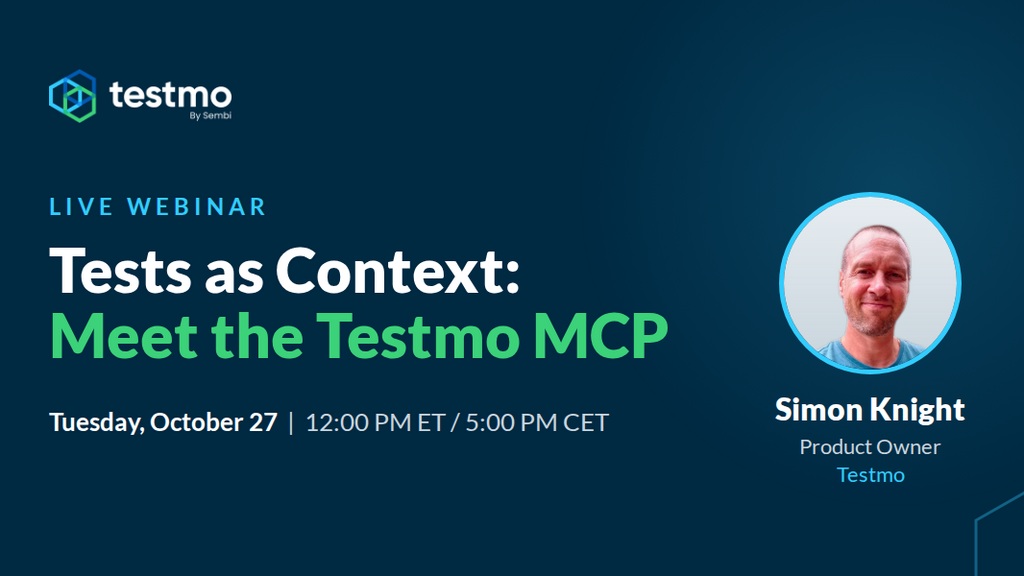
Your test cases are the context AI agents are missing. See how the Testmo MCP connects them in this free webinar.
With servers in >250 cities around the world, check your site for localization problems, broken GDPR banners, etc.

There are countless ways to show up and contribute. Which one will you try today?
Centralized execution, reporting and insights in one place.
