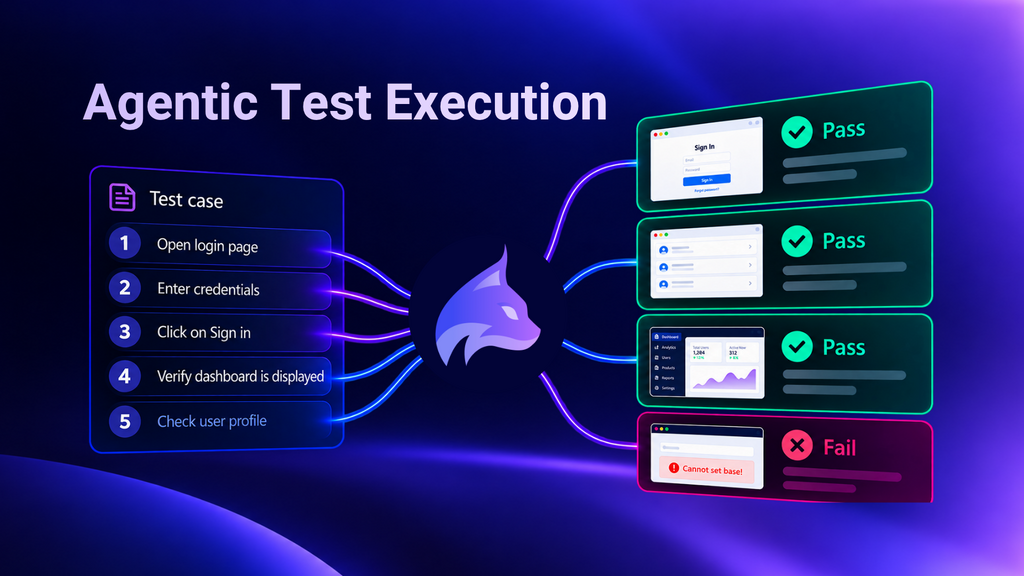
A feature of some AI-powered test automation tools that enables automated tests to detect and fix themselves when they break, typically due to changes in the UI or DOM, without requiring manual intervention. The tool attempts to find an alternative locator or adjust a failing step so the test continues to run. While this can save significant maintenance time, it carries risk: if the tool changes an assertion to force a failing test to pass, or patches around a broken user flow rather than surfacing it, defects can be hidden and test intent can be silently lost.
For example, a self-healing tool might automatically update a CSS selector after a UI redesign; but if it changes what is being asserted rather than just how the element is found, the test no longer verifies what it was designed to verify.
For example, a self-healing tool might automatically update a CSS selector after a UI redesign; but if it changes what is being asserted rather than just how the element is found, the test no longer verifies what it was designed to verify.