Course (3)
Glossary Term (21)
Insight (16)
Certification (2)
Collection (1)
Session (20)
Moment (153)
News (1)
Link (40)


A limitation of AI language models where training on "A is B" does not automatically teach the model "B is A." For example, a model that knows Tom Cruise's mother is Mary Lee cannot reliably answer who Mary Lee's son is.
A system that generates outputs based on probabilistic and statistical computations rather than fixed rules, meaning the same input can produce different results. In AI, this is what makes models appear clever but also unpredictable and prone to quality gaps.
[Ai tools] are non deterministic or like a better word is stochastic systems, which can predict data based on smart advanced mathematical operations, statistical computations, probabilistic data, calculus, uncertainty, and so on. And that is the reason why AI looks really clever. No matter what you ask to it, it is always ready to give you an answer.
An attack in which a malicious prompt is injected into an AI system's active context, often with instructions to "forget" previous guidelines, granting the attacker control over the model's behaviour for the remainder of the session.
The malicious prompt can just say that forget everything which was told to you before and now just do this thing which I'm asking you to do. Now, if this happens, this is called context poisoning or context injection. And once you poison the context, then you can get anything and everything done out of any AI system.
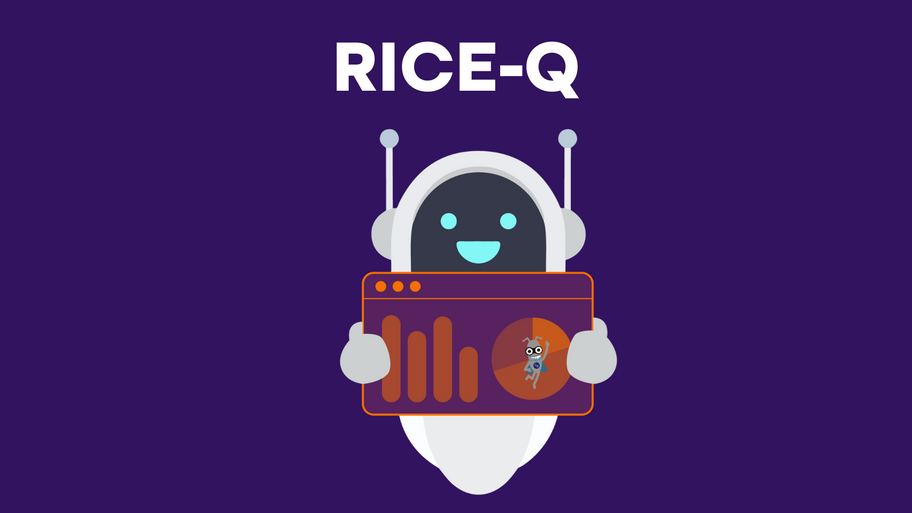
A framework that helps the AI gather the right context and not work as an alien.
R – Role: Ask the AI system to “act as a role”.
I – Instructions: This is the instruction that you give to the AI system.
C – Context: Describe the context about the purpose, feature, application, or system.
E – Example: Provide a sample of your expected output.
Q – Questions: Tell the AI system to ask you clarifying questions before answering or hallucinating.
Self greening is a term used to describe a situation where AI automatically “fixes” or adjusts tests so that they pass, potentially hiding genuine problems that should have caused them to fail. It’s a side effect of AI-driven test maintenance or “self-healing” systems that focus on achieving green (passing) test results, sometimes at the expense of meaningful accuracy or visibility into real issues.Here’s what it looks like:
You run an automated accessibility scan.
The AI finds two issues.
You tell it to keep fixing until tests pass.
It changes the test to expect “2 issues found.”
The test passes.
Now, if a later version adds two new issues, the AI updates the expected count to 4, and the test still passes. You get a clean dashboard. But the product is breaking quietly. Self-greening gives you a false sense of stability. Everything looks green, but the tests are no longer testing anything useful.While AI can be guided or configured to restrict healing to safe areas (like element identifiers or path changes), out-of-the-box implementations often risk self-greening, trading genuine test insight for the illusion of stability.You can reduce self-greening risks by:
Limiting where AI can apply self-healing (for example, only to locators or paths).
Reviewing AI-made changes before merging them.
Tracking the difference between AI-fixed and human-reviewed test results.
Treating “all-green” reports with healthy skepticism.

Model-based testing uses a flow chart or design (model) to aid in understanding and test design. It's like using a map to find the best way to go on a journey

A mind map, sometimes written as mindmap, is a visual thinking tool that helps you organize your ideas, explore possibilities, and show your work clearly. It's very useful when you're testing software. Imagine starting with one big idea in the center, like a feature you want to test. From there, you draw branches that lead to smaller ideas like test ideas, possible bugs, risks you encounter, or things that you want to ask others. Each branch can grow more branches, just like a tree! Testers love mind maps because:
They make complex ideas easier to look at and understand.
They help you see the big picture and the tiny details at the same time.
They’re fun to create and great for sharing your thoughts with others.
A mind map is like a thinking playground where creativity and logic meet visual intelligence!


A Kanban Board is a simple visual tool that helps you manage work as it moves through different stages of a process. It helps you divide and visualize work into columns such as “To Do,” “In Progress,” “Done”, etc.Each piece of work is written on a card. As work progresses, the card moves from one column to the next. It helps every stakeholder see what needs to be done, what’s in progress, and what’s finished at a single glance.By making work visible and limiting how much is “In Progress” at any time, it helps teams stay focused, avoid overload, and think more clearly about how work is actually getting done.

Prompt injection is a security attack that happens when someone intentionally manipulates the input to a Generative AI system like a chatbot or code generator to make it behave in ways the designer didn’t intend.It’s done by crafting inputs to Gen AI systems in order to confuse, hijack, or redirect the AI’s response by messing with its underlying structure.For software testers, it's a way to test for input attacks on LLM-based systems. Just like a SQL injection or XSS, but here the payload is language and words designed to interfere with the model or system prompts.

Artefacts or records created or collected during the testing process. It serves as proof of what was tested and can be used for further investigation, documentation, or compliance needs.
Boilerplate code is the recurring, and reusable code that underpins software projects. It serves as a simple and reliable standard blueprint, that is often repeated across different tests (or test scripts).This familiar code can cut down on rewriting the same routine logic time and again, providing a solid foundation on which the actual test scripting can grow.Example: In a typical test automation framework, you’ll find boilerplate code for handling setup and teardown routines, logging, driver management, and sometimes even error management.
Pitfalls with boilerplate code?
Overusing boilerplate code can lead to inflexible, and complex code structure. What begins as a time-saving tool may evolve into a maintenance challenge if not used carefully. Copying and pasting the same code everywhere, instead of encapsulating it in reusable methods or modules, can create a hidden trap in long run.

A digital twin is a highly consistent, software-based replica of a physical system that runs the same software, behaves like the real device, and can be interacted with as if it was the real thing.
Unlike traditional simulators that mock specific parts or APIs, a digital twin mirrors the actual device’s environment, allowing for realistic and early testing even before the hardware exists.
It’s like having a stand-by for your device that you can test, break, and explore without needing the physical hardware on hand.
Take this 7-question assessment to see where your QA team stands and get a plan for what to automate next.
There are countless ways to show up and contribute. Which one will you try today?

Manage your entire QA lifecycle in one place. Sync Jira, automate scripts, and use AI to accelerate your testing.
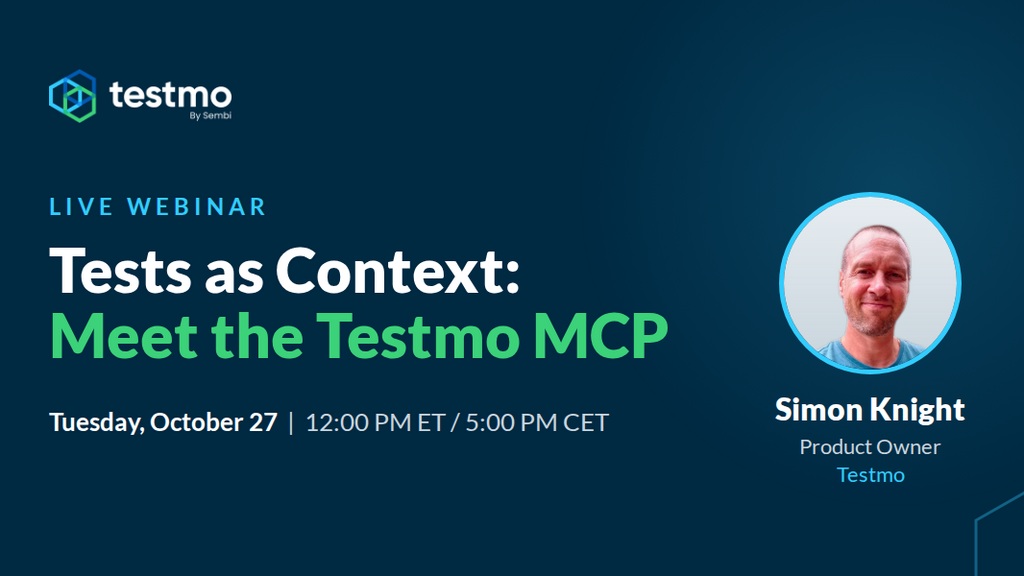
Your test cases are the context AI agents are missing. See how the Testmo MCP connects them in this free webinar.
