
Shawn Vernier

Shawn Vernier
Quality Engineer
He/Him
The answer to quality is context.
🎂 MoTaBirthday | August 27, 2025
Open To
Work
Teach
Speak
Mentor
Mentee
Podcasting
Review Conference Proposals
Write
CV Reviews
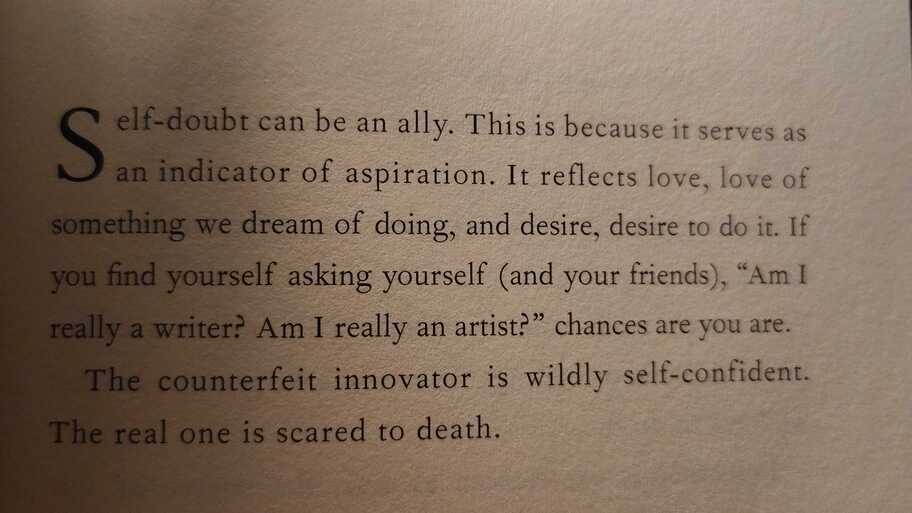
On this week's Episode 147 of This Week in Quality, the topic of Impostor Syndrome came up, and I said I'd share something I read recently from the "War of Art" by Steven Pressfield. The quote itse...
14 Aug
Recently I was playing an online game with friends. The game glitched repeatedly, generally full of bugs. "I'm sure it was vibe coded" remarked one player. Thing is, this is the fourth installment ...
4 Aug

On the 15th of January 2026 myself and Ujjwal Kumar Singh joined a call and pressed record. We were curious to see what would happen. A few weeks later I’d done the same with Neil Taylor and Clare ...
6 Jul

I've never done a proper podcast, yet here I am.20 episodes in.Weekly cadence.Great quality conversations.Catching up with old friends.Making some new ones.100% stepping outside of my comfort zone....
4 Jun
Shift left on your career and build resilience before you need it.
8 Sep

Sometimes the most effective guardrail isn't the most sophisticated one
21 May

A reflective episode on joining new teams, respecting existing quality processes, asking better questions, naming the work we already do, and using community to turn uncertainty into learning.
14 Aug

An exploration of how epistemology underpins quality thinking, helping quality people examine what they know, how they know it, and how that shapes their quality choices.
15 May
Automation Treadmill
QA usually owns the automated tests. When a company mandates a level of automation, QA spends a part of their time growing the number and scope of the automated tests. Over time, maintenance of these tests can become expensive, and most of a QA teams time can be spent maintaining the existing automation while adding all new tests into the automation. This becomes a perpetual treadmill of building test automation that can take time and energy away from other valuable QA tasks such as design and specification review, functional testing, exploratory testing, interactive testing, etc. "Now, here, you see, it takes all the running you can do, to keep in the same place" - The Red Queen, Through the Looking Glass
Anti-Pattern
A pattern of design commonly used and conceptually intuitive that is otherwise known to be ineffective, sub-optimal, or counter-productive to the goal.Examples include Spaghetti Code, the Testing Ice Cream Cone, Code Coverage Mandates, Unfalsifiable Test, Skip The Test, and Watchmen Tests
Performative Testing
Testing work that looks impressive, generates artifacts, and fulfills metrics while providing little value. Performative Testing is testing effort devoted to tasks make it appear as if QA is doing work while often ticking off mandated checkboxes.End-to-End test automation is an example. There is often an outsized focused on E2E tests as they look impressive visually, yet they are expensive to write and maintain while finding very few real bugs. Meanwhile Functional and Exploratory ("manual") testing efforts provide high value but are difficult to quantify and therefore can be neglected or deprioritized. "Looks busy. Feels productive. Delivers nothing" - Rahul Parwal
Comments
(1)
Why software testers should write documentation even if no one else reads it
Addendum to this article - "The Sticky Tentacles of AI"
https://www.ministryoftesting.com/moments/the-sticky-tentacles-of-ai
A short Moment reflecting on the use of AI to integrate documentation where AI can proactively identify gaps in the documentation. Though I still believe it should not write the documents whole cloth




Not registered for any upcoming events
This Week in Quality
Share your week’s highlights, challenges, and lessons in quality
This Week in Quality
20 days ago
