Manchester chapter evening
06 May 2026
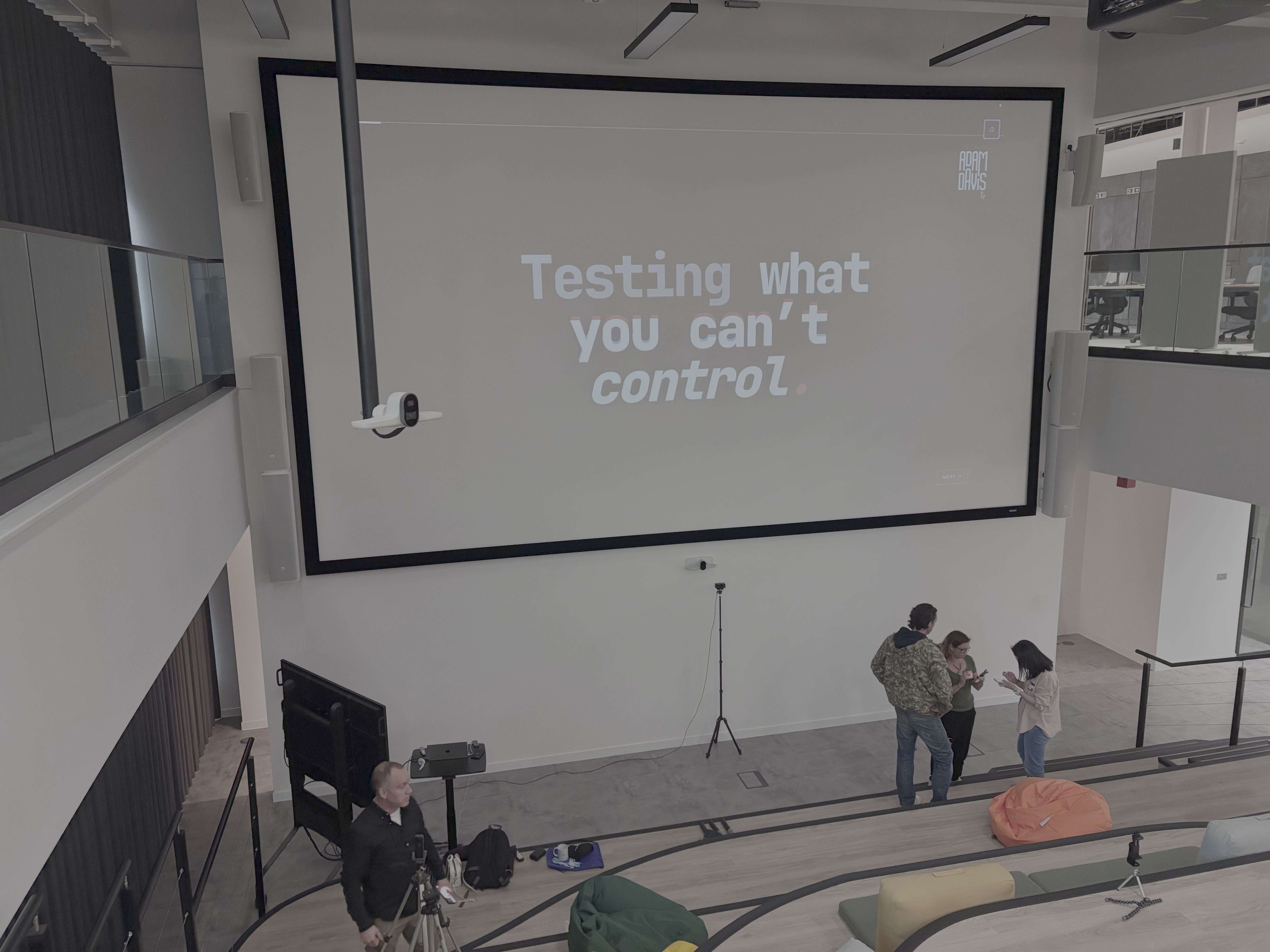
Last night’s Manchester chapter evening was one of those sessions I’ll remember for a long time.
Huge thanks to the MoTaverse, especially Diana d'Oliveira Dromey, for trusting me with something a little different. Turning a room full of people into part of a live distributed system was either going to look amazing or descend into complete chaos. Honestly, that uncertainty was the entire point of the talk.
Massive thanks as well to Steven Warburton - CTAL-TM and Matillion for hosting the event and providing such a brilliant space for the community.
The session was powered by pixelmesh, one of the most complex side projects I've ever built. From the outside it just looks like phones flashing in sync, but underneath it is computer vision, distributed systems, synchronisation, networking, timing problems, unreliable environments, and a lot of experimentation trying to make hundreds of independent devices behave like one unified display. Last night was also the first public outing of some early pixelmesh v2 experiments, which definitely added to the pressure.
What made the demo interesting for me was that it wasn't running under perfect conditions. Different phones. Different brightness levels. Different seating positions. Different network conditions. Real people. Real unpredictability. Exactly the sort of conditions systems actually have to survive in. Watching the audience collectively become part of the system while we tested the edges of it live on stage was honestly surreal.
Really appreciated all the conversations afterwards too. A lot of people came over wanting to talk about observability, failure modes, crowd interaction, distributed systems, computer vision, and how we create safer ways to experiment with chaos before production does it for us.
Also really appreciated the feedback and conversations after the session, especially from Jitesh Gosai, Chloe Zeng, Darryl Kennedy and Vikas Mackevicius. Hearing different ideas, reactions, and perspectives on where pixelmesh could go next was genuinely valuable.
Thanks to everyone who came along, joined the demo, and trusted me enough to point their phones at a giant experimental side project built in evenings and weekends. Manchester was a lot of fun.
Adam is a seasoned Software Engineering Manager with over a decade of experience leading medium to large-scale teams of testers, QA professionals, developers, and release engineers. He is passionate about cultivating collaborative environments that spark innovation, both in professional settings and through side projects. Adam believes that side quests are crucial for nurturing creativity and skill development, allowing individuals to explore new technologies and approaches. With a focus on creating scalable solutions across diverse infrastructure platforms, he combines a practical and analytical mindset to address complex challenges. Adam is dedicated to fostering a culture where teams can thrive and achieve outstanding results.