Rolf Kunisch
Rolf Kunisch
Software Architect
🎂 MoTaBirthday | May 26, 2026
I'm proud to say that at least 5 of my developer colleagues joined today's episode of This Week in Testing!One of them even joined the stage right away to talk about clean code 😱I ducking love it 🦆
22 May
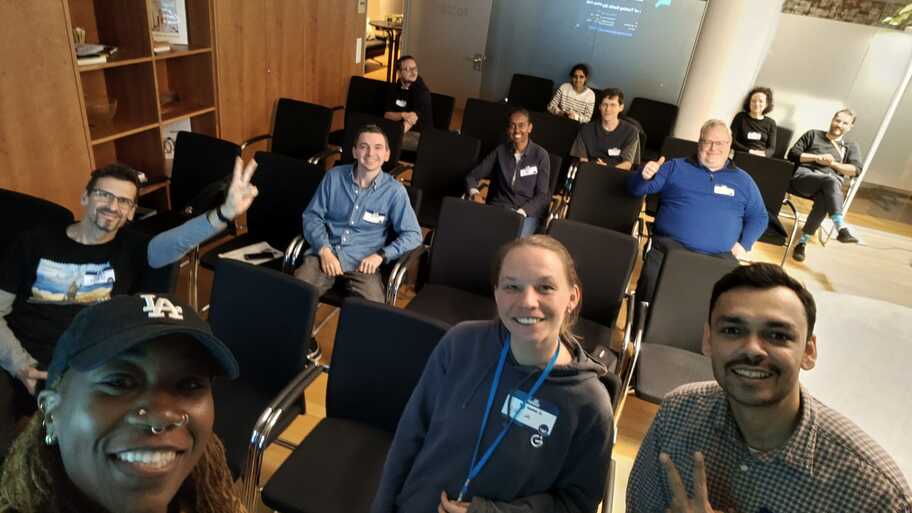
Our very first Meetup at Assecor GmbH is in the books! Thanks to everyone attending, I had so much fun 😊 I hope we can do it again soon!🎤 If you're interested to speak at one of our next meetups, p...
25 Oct
Clean code, messy legacy, and good products. Demi, Simon, Rolf, Nadja and the TWiQ crew get into it all.
22 May
Clean Design
The application of clarity and simplicity principles to a product's user interface and experience, rather than to its underlying code. Rolf observed that the most successful products tend to share uncluttered, intuitive interfaces that make their purpose immediately apparent. Just as clean code prioritises readability for developers, clean design prioritises comprehension for users. The two share the same underlying mindset: don't accept halfway results, and always optimise for the person who has to work with what you have made.
"If you have a product, you see the most successful products are the one with clean design. So you have don't have clean code, but clean design. If you have something cluttered in, for example, on a mobile app, you have something that's just complicated. Those apps don't usually succeed."..."And that's kind of the same thinking process. What that you put your understanding and the usability on first place and don't accept halfway results, but always try to make it better. And that's something what you do with clean code as well. It's the same mindset, I would say." — Rolf Kunisch
Single Point of Truth
The principle that any given piece of knowledge or business logic should exist in exactly one place in a system, so that changes propagate consistently without the risk of contradiction. Rolf used a value-added tax example: extracting the tax calculation into one named method means legislation changes require an update in one location only. Simon noted this connects to a quote from Robert C. Martin: "Truth can only be found in one place: the code." A system with a single point of truth for its logic is easier to maintain, test, and reason about.
Write Everything Twice (WET)
A humorous backronym used to describe code that violates the DRY principle by duplicating logic or knowledge in multiple places. The term was coined as a contrast to DRY and is sometimes expanded as "Write Every Time" or "We Enjoy Typing." During this episode it was independently coined live in the chat: "You want DRY feet, not WET feet." WET code is harder to maintain because a single change in business logic must be tracked down and repeated in every location where it appears.
Don't Repeat Yourself (DRY)
A coding principle stating that every piece of knowledge should have a single, authoritative representation in a system. When logic is duplicated across a codebase, any change must be made in multiple places, increasing the risk of inconsistency and bugs. Illustrated this with a value-added tax example: rather than scattering a raw multiplier throughout the code, extracting it into a named method means the logic lives in one place and can be updated once. The opposing backronym is WET (Write Everything Twice), used humorously to describe code that violates DRY.




Moment-um Builder
This badge is awarded to those that have been tagged in their first Moment.
Badge Award
2 months ago
Learner finished your session
How clean code led to continuous cleaning - Ep 136
Community Star
3 months ago
Chapter achievement unlocked: MoT Berlin has a new chapter artwork!
Check out our new chapter artwork above, just in time for our next event this Friday!
(Not registered for the event yet? Do it now here: MoT Berlin Chapter Event #50 (actually #60 🥳): Building Bett...
Contributor thanking
4 months ago
Thanking contributors
Chapter achievement unlocked: MoT Berlin has a new chapter artwork!
Community Star
4 months ago
