
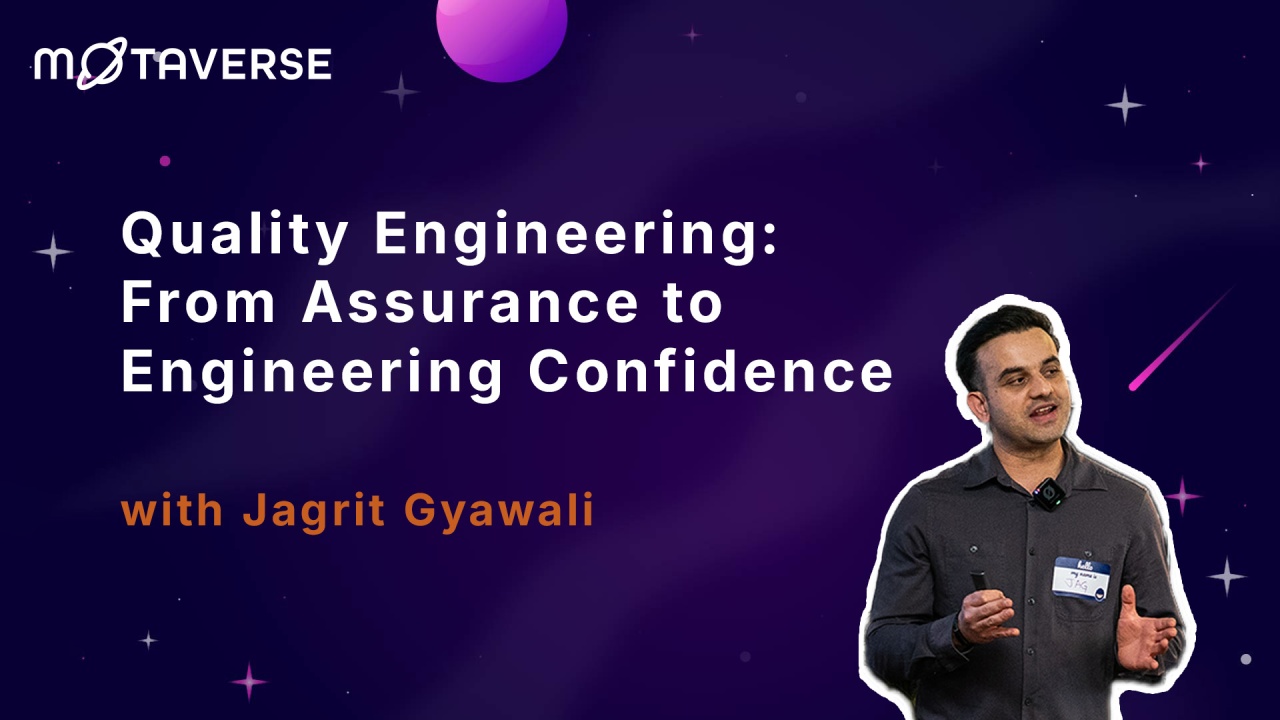
Quality Engineering: From Assurance To Engineering Confidence
-
Locked
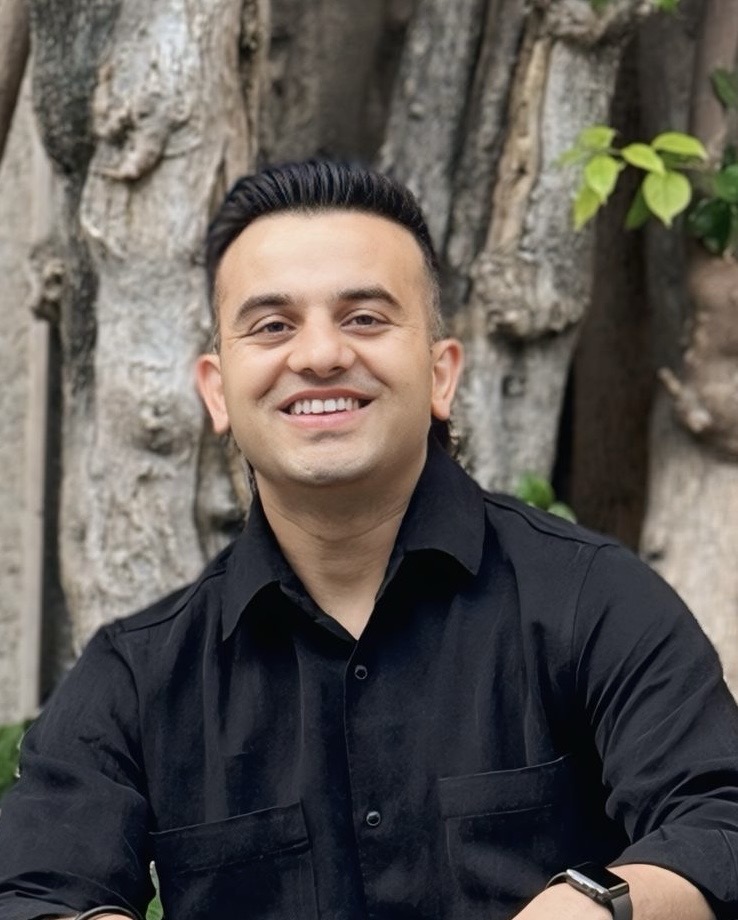
In this talk, Jagrit Gyawali reflects on how quality engineering has evolved from a late-stage testing function into a broader discipline centred on mindset, learning, and fast feedback. Drawing on experience across organisations including Jet2, Meta, and the BBC, he argues that quality should never sit solely with QA, nor be judged by test case counts or automation volume. Instead, he frames testing as a feedback system: the real measure of success is how quickly teams can learn, build confidence, and get safe changes into users’ hands. Throughout the talk, he returns to the idea that the strongest quality teams are the ones that shift learning earlier, involve engineers and stakeholders collectively, and focus less on finding bugs and more on preventing them.
Jagrit also connects that mindset to modern delivery practices, from layered testing and lead time to deployment frequency, observability, and recovery from failure. He makes the case for smaller releases, stronger engineering partnerships, and automation that is atomic, deterministic, fast, and diagnosable enough for everyone on the team to trust and maintain. Looking ahead, he explores how AI will further push quality engineering toward probabilistic thinking, where the question is less “is this exactly right?” and more “is this acceptable, reliable, and safe enough?” The result is a thoughtful overview of quality engineering as an evolving team capability: one grounded in shared ownership, earlier feedback, and a stronger connection between testing, delivery, and business outcomes.





Comments