

Canary deployment is a deployment strategy where new changes are released to a small subset of users or systems before rolling out to everyone. This approach helps teams detect issues early and minimize the impact of potential problems.
Product Development Life Cycle (PDLC) is the structured process that teams follow to take a product from initial idea through to delivery and beyond. The 5 phases of the PDLC are:
Discovery & Ideation: identify user problems, explore potential solutions, and validate assumptions
Solution Definition: define product requirements, designs, and technical plans
Build & Test: develop and validate the product
Launch: deploy the product
Monitor & Maintain: track product performance and make improvements or fixes as needed
QACI (pronounced “quacky”) is a responsibility model developed by Susanne Abdelrahman that adapts the traditional RACI framework specifically for quality practices. The memorable pronunciation was suggested by Simon Tomes. QACI stands for:
Quality Practice: A specific quality activity or process, like release readiness determination, bug triage, or writing a test strategyAccountable: The person who owns the outcome and is held responsible for the practice working effectivelyContributor: People who actively participate in or support the practice. These folks do part of the workInformed: People who need visibility into the practice and its outcomes but don't participate directly
Empathy mapping is a collaborative visualization tool that helps teams develop deeper understanding of users and stakeholders by mapping their experiences across four key dimensions: what they say, think, do, and feel.
Originally developed for user experience design, empathy maps create shared understanding by capturing both observable behaviors (what people say and do) and internal experiences (what they think and feel). The process involves placing a person or persona at the center and filling in insights around the four quadrants, ideally based on real research rather than assumptions.
Quality engineers can use empathy mapping to understand both end users and internal stakeholders. For users, it helps identify quality characteristics that matter most in real-world usage. For stakeholders like product managers or developers, it reveals how they experience quality trade-offs and what motivates their decisions, making quality advocacy more effective.





Boost your career in quality engineering with the MoT Software Quality Engineering Certificate.






















I’m excited to share that, alongside TeamMoT, we’ll be gathering 50 Leaders in Quality on September 30th.
What looks like a one-day event is actually the beginning of a bigger journey: a committ...

Our role as quality people is shifting.

Find out what’s really behind testing hires that fail (hint: it’s rarely because the tester couldn’t handle the job!)

Get enterprise service virtualization for complex systems, realistic behavior, and AI-assisted workflows.

MoTaCon is coming, have you got your ticket yet?

Better than a generic video, see YOUR test, live, ready to show you what matters most: quality at scale.
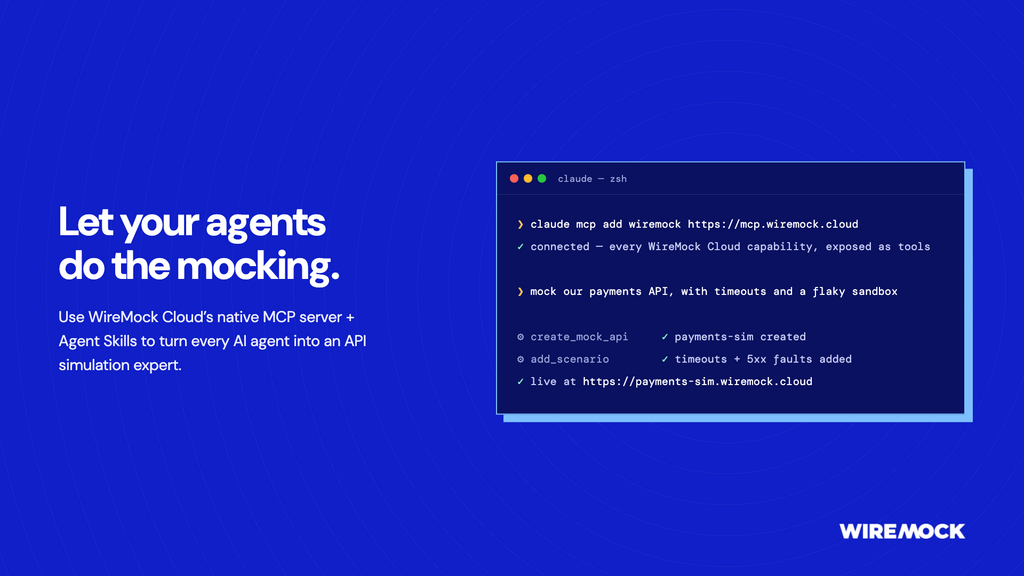
Let agents spin up stateful API simulations so they can deliver better work, without hitting your live endpoints.
