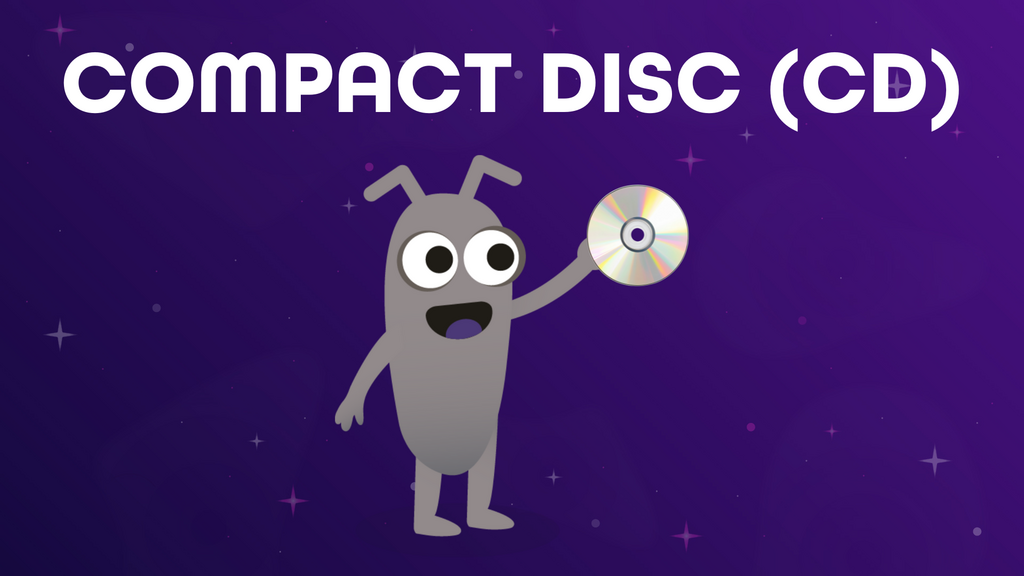
A Compact Disc (CD) is a digital optical disc data storage format that was co-developed by Philips and Sony to store and play digital audio recordings.
In terms of data capacity, standard CDs can hold up to 700 MB of data or roughly 80 minutes of uncompressed audio.
The mechanism for storing data works in a way that the microscopic "pits" and "lands" on a reflective layer, which a laser beam inside the CD player reads.
Unlike vinyl or cassette tapes, CDs are non-contact media, meaning the quality does not degrade with each playback.
Over time, CDs got supplemented by DVDs and Blu-ray disks, which are similar in appearance but with larger capacity, and can store video content of much higher quality. The rise of the internet, streaming, online gaming, etc., all contributed to the decline in the use of CDs.
In terms of data capacity, standard CDs can hold up to 700 MB of data or roughly 80 minutes of uncompressed audio.
The mechanism for storing data works in a way that the microscopic "pits" and "lands" on a reflective layer, which a laser beam inside the CD player reads.
Unlike vinyl or cassette tapes, CDs are non-contact media, meaning the quality does not degrade with each playback.
Over time, CDs got supplemented by DVDs and Blu-ray disks, which are similar in appearance but with larger capacity, and can store video content of much higher quality. The rise of the internet, streaming, online gaming, etc., all contributed to the decline in the use of CDs.