
AMA Epistemology Answer: Limits of Testing
13 May 2026
In this moment:
Simon Tomes
Partially back from a two month hiatus - apologies this took forever but it never left my backlog!
From the original moment: AMA about Epistemology - the practice of testing
Simon asked: "Can you share some examples where epistemology highlights the limits of what testing can actually prove?"
I had to think about this one! I hope I am answering the right question - "testing" is a nebulous term.
From the original moment: AMA about Epistemology - the practice of testing
Simon asked: "Can you share some examples where epistemology highlights the limits of what testing can actually prove?"
I had to think about this one! I hope I am answering the right question - "testing" is a nebulous term.
Epistemology is a science (hence, -ology), and therefore follows the scientific method: Observation, Hypothesis, Experiment
You see a button, you get an idea of what the button does based on context, you click the button. Repeat: you observe what clicking the button did, consider why it did that, and then try again possibly with different inputs.
The key to answering this is within that process. In order for us to test something, we must be able to use the scientific method. It must be a real, tangible thing. You need a running product. An idea is just a belief - something that may be true eventually. Requirements documents, acceptance criteria, market research, wireframes - all illustrations of an idea which may well prove a fever dream. You need a system that makes that belief falsifiable. Until you have a system that can show you the truth of what you built, all you have is ideas. And ideas cant be tested.

Shawn Vernier
Quality Engineer
He/Him
The answer to quality is context.
Open To
Work
Teach
Speak
Mentor
Mentee
Podcasting
Review Conference Proposals
Write
CV Reviews

Ady Stokes
I love this as it has given me a great insight into my many mindsets theory. I'd love to hear your thoughts on the following statement, and others too.
If all testing is anchored in the scientific method, observing through different mindsets generates different hypotheses (test ideas) and experiments (the actual tests).

Simon Tomes
Thanks for answering, Shawn.
I've found in some cases that it's handy to start with answering the question: What value are we attempting to deliver with this product/feature? And then ask what risks (things) might threaten that potential value? And then draft questions that we need to answer to explore those potential risks.
A Values, Risks, Questions approach.
The interesting thing is that testing can highlight information about potential risks, not so much about actual tangible risks.
Sign in
to comment
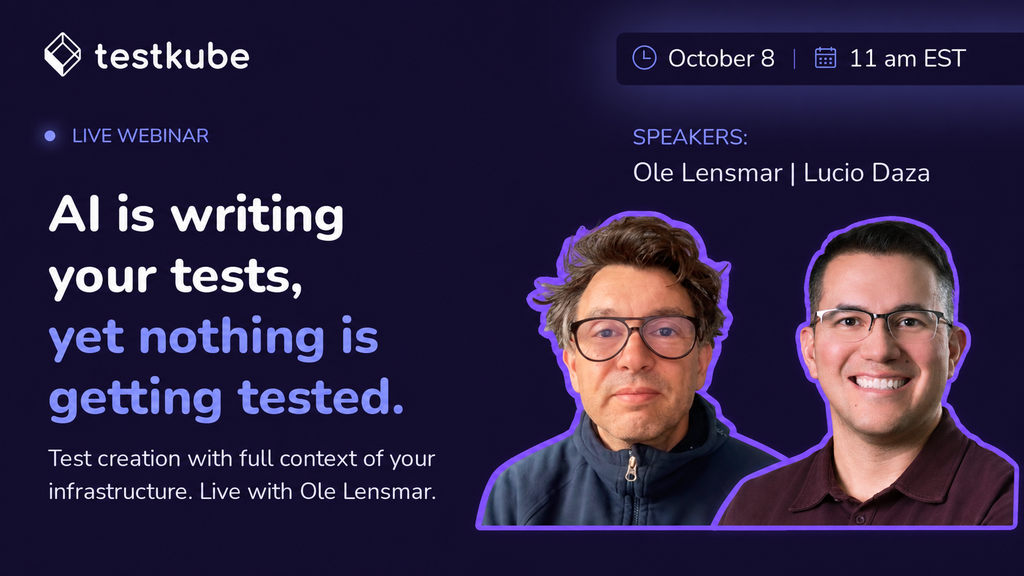
Getting tests that catch real failures is the hard part. Join us on Oct 8 and see how it's done.
Explore MoT
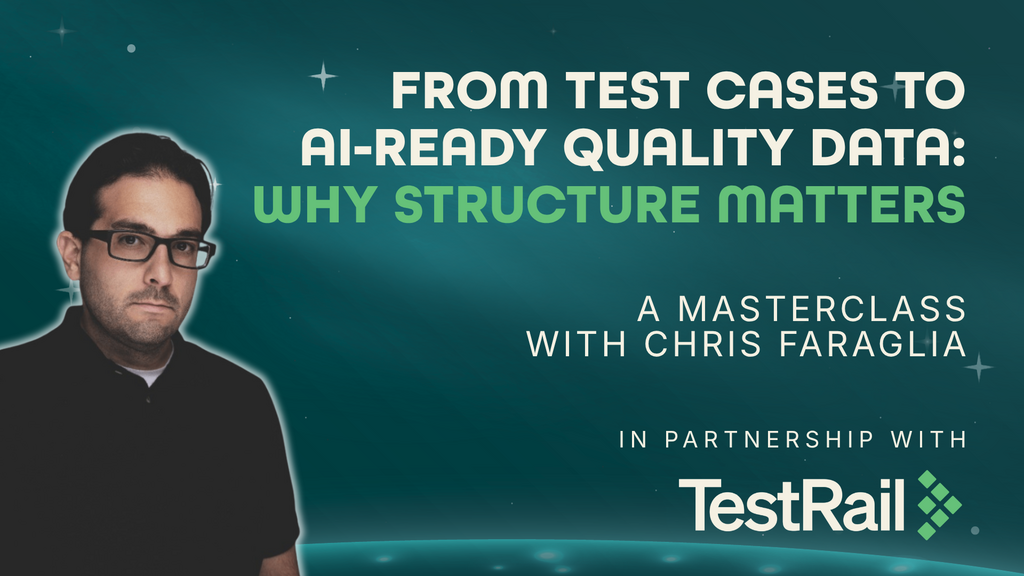
Learn how to structure and organize test management data as an AI-ready foundation that gives AI systems richer context for testing insights and workflows.
Boost your career in software testing with the MoT Software Testing Essentials Certificate. Learn essential skills, from basic testing techniques to advanced risk analysis, crafted by industry experts.
Debrief the week in Quality via a community radio show hosted by Simon Tomes and members of the community
