
Rabi'a Brown

Rabi'a Brown
Wordsmith, Ministry of Testing
At Ministry of Testing, I review article submissions and help our writers present their ideas in the clearest way possible.
Qué aprovechéis y disfrutéis lo que ofrecemos en Ministry of Testing!
🎂 MoTaBirthday | September 21, 2021

Eighteen months, 19 modules, and 59 amazing contributors later, the MoT Software Testing Essentials Certification is complete!
Looking back, my favourite part has been seeing so many community m...
18 Aug

A screengrab of an online webinar space. There is a grid of profile pictures and a chat box on the right hand side.
7 Feb
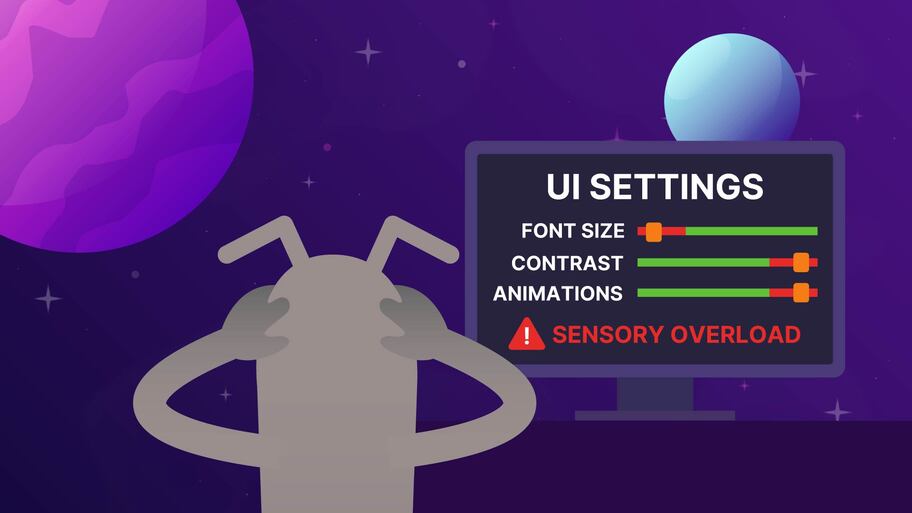
Apply autism-aware design principles to improve software usability for autistic and neurodivergent people.
4 Nov
Adopt combinatorial testing, a technique you may never have heard of but should consider using daily.
16 Sep
Inclusive Design
Inclusive design is a philosophy with this principle at its heart: if one user or group of users cannot use an application because something about it makes it inaccessible or difficult to use, it is not accessible or usable, period. So we who are members of development teams should always seek to design applications that everyone can use easily. Accessibility standards and usability guidelines are an important part of inclusive design, but inclusive design requires a broader outlook. We should not rely solely on a given set of standards or practices as the be-all and end-all of making our applications easy to use. We should always go further and anticipate how our applications might fall short of being usable by some people. How do we do that? A key guideline in inclusive design is to reflect, BEFORE we design or code, on how solving a usability issue for one group of people can make our applications easier to use for everyone. For example, ensuring that there is adequate color and saturation contrast between a screen background and text in the foreground is an important standard in accessibility for people with low vision. But it also helps those who may have no visual disability but who are trying to read a screen in bright sunlight. Note that “can use an application” means not just being able to read text on a screen and find navigation buttons, for example. It also includes getting intended tasks done in a reasonable amount of time and being satisfied or pleased with the experience. There’s no sense in designing an application that allows most people to complete their tasks when the application bothers them so much with notifications that they eventually abandon it for another.
Pairwise testing
A subset of combinatorial testing where all possible pairs of values for input or configuration parameters are tested at least once.
Combinatorial testing
When you do combinatorial testing, you ensure that the input or configuration parameters of the system under test can accept, without error, a meaningful subset of combinations of values possible for those parameters. If the app you're testing has more than one input or configuration parameter, you should include some combinatorial testing as part of your strategy. This is because research has shown that most failures result from the combination of specific values for one or two input or configuration parameters. The frequency of errors tends to decrease with value combinations from more than two parameters at once, but running those tests can be fruitful as well. Pairwise testing is a subset of combinatorial testing. It sounds out every possible PAIR of values. But pairwise testing does not always cover enough combinations of three, four, or more values. That's where more advanced combinatorial testing techniques come in. According to recent research, simply by ensuring that all possible three-way combinations of values for your parameters are covered, you'll catch 90 percent or more of the defects that could result from all possible combinations. This does NOT mean that you have to cover every single possible combination in your test plan! The set you need is small and manageable compared to all possible combinations. You may not have a full set of expected results for all of your combinations of values. The research suggests that in these cases, simply monitoring for system failures may be enough.
Microsoft surprises MS-DOS fans with remake of ancient text editor that works on Linux
(arstechnica.com)
25 Jun 25




Not registered for any upcoming events
Learner completed your lesson
19.1.0 of MoT Software Testing Essentials Certificate
Community Star
2 days ago
Star Light
This badge is awarded to those that receive their first community star.
Badge Award
17 days ago
Learner completed your lesson
19.1.0 of MoT Software Testing Essentials Certificate
Community Star
17 days ago
Observatory Enabler
This badge is awarded to those tagged in their first Observatory link.
Badge Award
about 1 month ago
