Kat Obring

Kat Obring
Founder, Director
she/her
Kat Obring has spent 20+ years in software delivery: DevOps QA engineer, Head of Delivery, and now a quality coach who helps engineering teams build measurable improvement practices. She runs Kato Coaching Ltd and has presented at PeersCon, Agile Testing Days, HUSTEF, and TestBash, among others. She is direct, opinionated, and has strong feelings about the word "quality."
🎂 MoTaBirthday | March 9, 2023
Open To
Write
Teach
Speak

On the 15th of January 2026 myself and Ujjwal Kumar Singh joined a call and pressed record. We were curious to see what would happen. A few weeks later I’d done the same with Neil Taylor and Clare ...
6 Jul
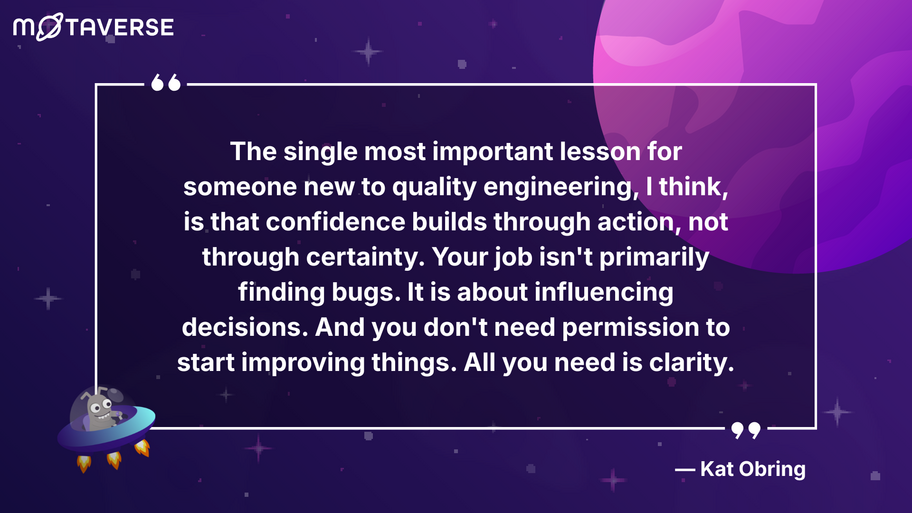
I've just reviewed Module 3, Lesson 3 of the <a href="/certifications/mot-software-quality-engineering-certificate" rel="nofollow noopener">Software Quality Engineering Certificate</a> (SQEC).
...
15 Jan
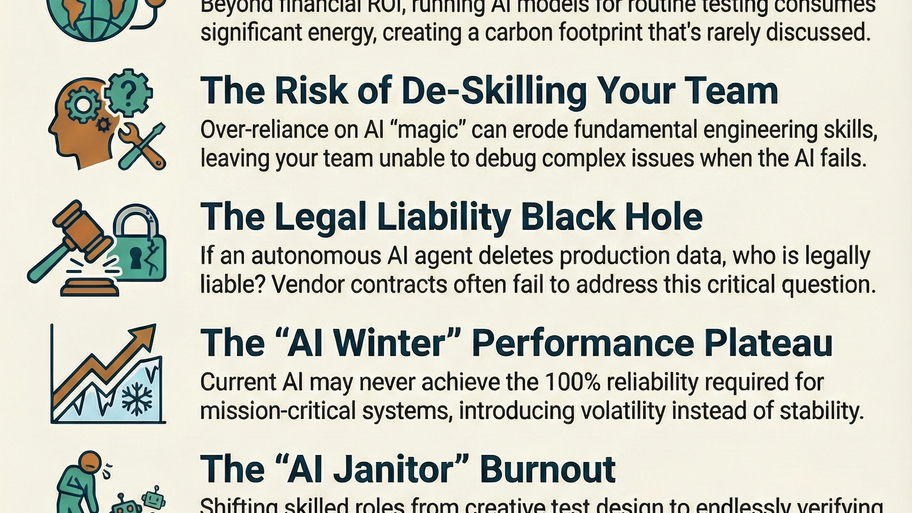
Most conversations about AI in testing are still stuck on the same question:
“Will AI replace testers?”
Meanwhile, the real risks are hiding in plain sight.
Vendors rarely talk about the dee...
17 Dec

after so much waiting and anticipating , I am returning to my career after a full time parenting break.
These 2 years were full of mixed feelings and self-doubts but I owe this community to back...
14 Nov

Analyse the risks of stagnant pull requests and adopt a Quality Engineering mindset to reduce technical debt and accelerate value delivery through developer-led testing and faster merge cycles.
17 Mar

Is the future of test case management at risk? Let's go exploring.
28 May
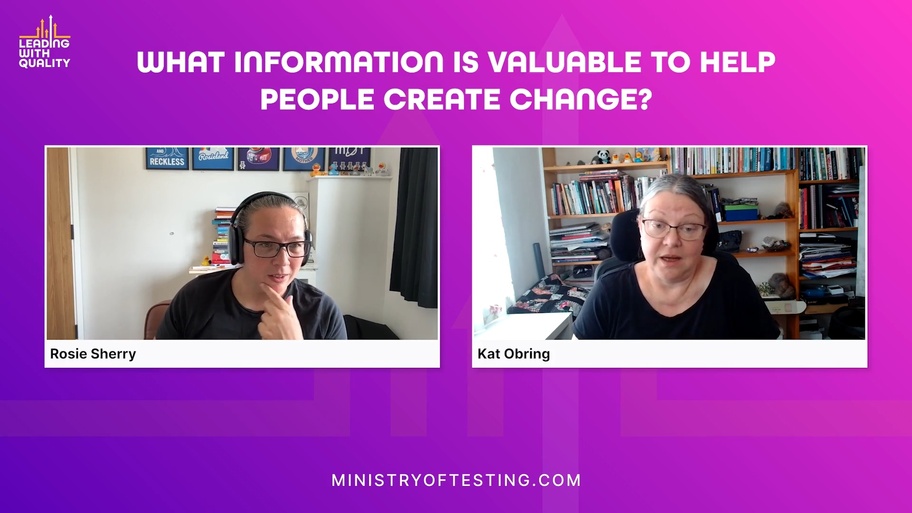
Learn how to influence, advocate, and create change when you’re struggling to get buy-in
3 Jul
Join Kat and Callum to discover what's working, examples and traps in QC
2 Apr
QED (Quality-focused Experimentation and Development)
A framework for improving quality through short, evidence-based cycles. It follows three steps: Question (define a problem worth solving), Evidence (design targeted metrics to measure it), and Develop (run small, time-boxed experiments to test solutions). Each cycle takes 2 to 4 weeks.
Time to restore service
How long it takes to recover from a failure in production once it has been detected.
Change failure rate
The percentage of deployments that result in a failure requiring remediation, such as a rollback, hotfix, or incident.
Lead time for changes
The time it takes for a code commit to reach production.
Deployment frequency
How often a team successfully releases to production within a given period.
Comments
(5)
GOT THE JOB !!!!
Congratulations, that's awesome news, well done!
Gwen & Veerle preparing the day-two-intro
I am feeling fomo because I had to miss it!
The quiet before the storm
They were total rock stars, so much gratitude for all the help!
Drop a quality comment to win your place at Leading With Quality
Because it's Friday and I've not done a dad joke in a while. I know where the door is, thanks.
Quality is like underwear: if it’s doing its job, you shouldn’t have to think about it ... but you’ll definitely notice when it’s missing.
Quality Leadership Roles — what's the real story?
You’re right: a lot of people are doing strategic, high-impact work at the same level as their peers in engineering, product, or platform.
Why don’t we call them what they are?
When we don’t name these roles clearly, two things happen. One, the work stays invisible to the wider organisation. Two, it becomes harder for others to imagine a career path into strategic quality roles.
Like you, I’m hopeful, and I love that Leading with Quality is creating space to explore that change.




Not registered for any upcoming events
Learner completed your lesson
3.3.0 of MoT Software Quality Engineering Certificate
Community Star
1 day ago
Learner completed your lesson
3.1.0 of MoT Software Quality Engineering Certificate
Community Star
3 days ago
Learner completed your lesson
7.4.0 of MoT Software Quality Engineering Certificate
Community Star
4 days ago
Learner completed your lesson
6.8.0 of MoT Software Quality Engineering Certificate
Community Star
4 days ago
Learner completed your lesson
3.3.0 of MoT Software Quality Engineering Certificate
Community Star
4 days ago
