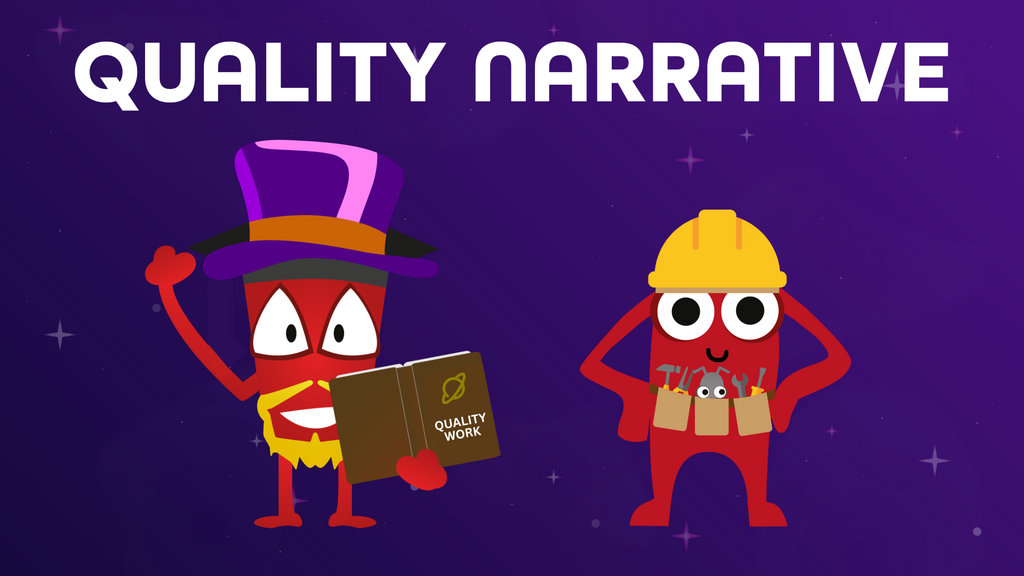
A quality narrative is simply a story that explains what your testing and quality work actually mean for the product, the team, the company, and the people who rely on it. It’s not a long report or a wall of numbers and metrics. It’s a way to take what you see every day and turn it into something relatable. It could be risks, patterns, wins, surprises, or any other value-added work you do.
You don’t need to drown anyone in data. A couple of meaningful metrics, paired with a clear example from a recent change or release, is usually enough. The aim is to connect the dots. Here’s what we found, here’s why it matters, and here’s what we might sensibly do next. When you speak in the same language as your product teams and leadership, the conversation shifts from reporting to collaborating.
Start small. Pick one or two areas that matter most to your organisation right now. Gather a few insights. Share a concise and simple update. Then iterate. A quality narrative should grow with your context, not become a burden. Most importantly, it’s not a shield or a promise. It’s a practical tool to make your testing and value visible. It builds trust, helps teams make better decisions, move with greater confidence, and understand how quality fits into their work every day.
You don’t need to drown anyone in data. A couple of meaningful metrics, paired with a clear example from a recent change or release, is usually enough. The aim is to connect the dots. Here’s what we found, here’s why it matters, and here’s what we might sensibly do next. When you speak in the same language as your product teams and leadership, the conversation shifts from reporting to collaborating.
Start small. Pick one or two areas that matter most to your organisation right now. Gather a few insights. Share a concise and simple update. Then iterate. A quality narrative should grow with your context, not become a burden. Most importantly, it’s not a shield or a promise. It’s a practical tool to make your testing and value visible. It builds trust, helps teams make better decisions, move with greater confidence, and understand how quality fits into their work every day.