Oleksandr Romanov

Oleksandr Romanov
Senior Software Engineer in Test
He/him
14+ years in testing and engineering | Co-host at Testing Minutes podcast | Writing and podcasting about test engineering, performance, AI, blockchain, and distributed systems | Views are my own
🎂 MoTaBirthday | March 17, 2017
Open To
Teach
Speak
Mentor
Podcasting
Review Conference Proposals
Write
CV Reviews
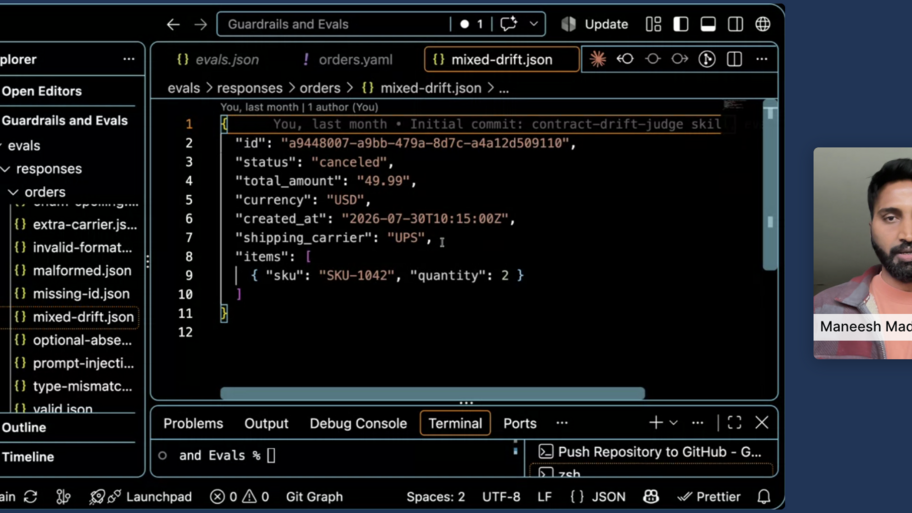
Listening to Maneesh talk about guardrails and evals at the AI Chapter event. My insight is that a guardrail is a ... text, and evals are like a JSON that validates a JSON schema.
23 Sep
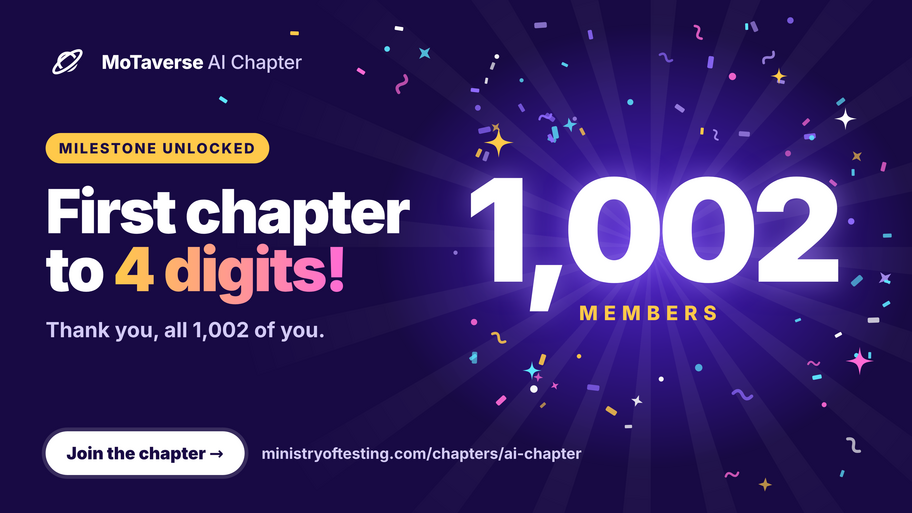
Join us today. We have a lot of exciting events coming up for you. 📅 23 Sep: Maneesh Madalla: Guardrails & Evals: keeping your AI skills honest.📅 22 Oct: Naveen Khunteta, Naveen AutomationLab...
22 Sep

And it isn't even ... at the unit-test level of your application. Testing doesn't stop there!Today's complex systems, with all this artificial intelligence inside, are built on components that are...
10 Sep
Today, I came across a very useful video about modern development with AI by Matt Pocock. The main ideas are below.
🧪 Development and AI
In an ideal world, we write a spec and then implement it in ...
9 Sep

Chaotic learning is not the best option
4 Jun
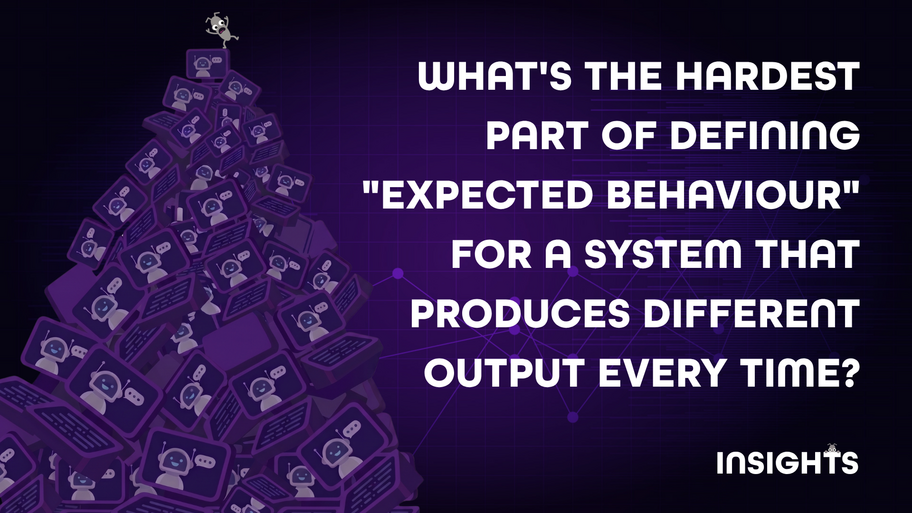
When a system improvises like a jazz soloist, "different" stops meaning "wrong"
3 Jun

Learn how software engineering is shifting from basic prompt engineering to autonomous AI agents and intent-based workflows.
16 Jul
A hot-takes episode on AI dependency, community knowledge sharing, silos, and why exploratory testing matters more than ever as software teams move faster.
3 Jul
Metamorphic testing
It's hard to determine how a change in the input value will take effect on the output value. Here comes the metamorphic testing. It's hard to find out whether this value is correct or just an example of hallucination.
Test Everything Twice (TET)
A playful backronym coined live in the TWiQ chat as a testing-world companion to the DRY/WET family of terms, standing for "Test Everything Twice." as a counterpart to WET (Write Everything Twice), it captures the idea of deliberate, thorough verification rather than assuming a single test pass is sufficient. Like WET and DRY, it works best as a conversational shorthand for a mindset rather than a strict rule.
Ikigai
Ikigai (生き甲斐, lit. 'a reason for being') is a Japanese concept of an individual's definition of the meaning of their life.Héctor García and Francesc Miralles included a Venn diagram of Ikigai in their book: "Ikigai: The Japanese Secret to a Long and Happy Life". This diagram includes four elements: what a person likes, what a person is good at, what the world needs, and what can be rewarded. When these four elements overlap, that person has found their ikigai.
Comments
(5)
Stop studying, start learning: How to stay focused in the world of shiny tools
Thanks for the comment, @Adam!
I've recently explored the topic of using AI (LLMs) with Obsidian notes. At first glance, it looks like a nice tool.
But then it becomes easy to delegate learning tasks (finding connections, generating ideas) to AI.
But we actually learn when we do these things. So if we delegate them - we learn nothing. We are just consuming information.
So the only AI thing that I am using is the default Obsidian plugin called "Smart Connections". It scans notes and builds a local RAG showing the most relevant notes together.
A tester’s guide to AI guardrails
Beautiful masterclass. Nice topic and very good delivery.
Game for testing knowledge is a great idea. Thanks, Rahul!
And the Ambassadors of the MoTaverse for 2026 are... 🥁
It's a great pleasure to be in the company of such a wondeful people! Let's dive into MoTaverse together! )
I blame Ministry of Testing for this!
Congratulations! One decision to speak at Testing Planet led you ... to LDX3. :) What will be the next step?
Learning to think in systems: Lessons from my mentor
Good article. The thing I liked the most is the feeling of the flow in the story. It could be a whole book with lessons learned:)
Claude Certifications 2026: Exams, Preparation & My Experience
(testengineeringnotes.com)
16 Sep
How to learn Claude and Claude Code for free in 2026
(testengineeringnotes.com)
15 Sep
5 big ideas from "Test Automation Fundamentals" book
(testengineeringnotes.com)
12 Aug
5 big ideas from "Taking Testing Seriously" book
(testengineeringnotes.com)
04 Aug



Not registered for any upcoming events
Member joined your Chapter
Member joined TWiQ — This Week in Quality chapter
Community Star
about 12 hours ago
Event Aficionado
This badge is awarded to Chapter Leads that have run 25 events.
Badge Award
2 days ago
