
Matthew Whitaker

Matthew Whitaker
QA Team Lead
He/Him
QA professional with 9+ years in various industries. I enjoying implementing testing frameworks in manual and automated testing. Passionate about collaboration and improvement
🎂 MoTaBirthday | November 4, 2024

I’m excited to share that, alongside TeamMoT, we’ll be gathering 50 Leaders in Quality on September 30th.
What looks like a one-day event is actually the beginning of a bigger journey: a committ...
9 Sep
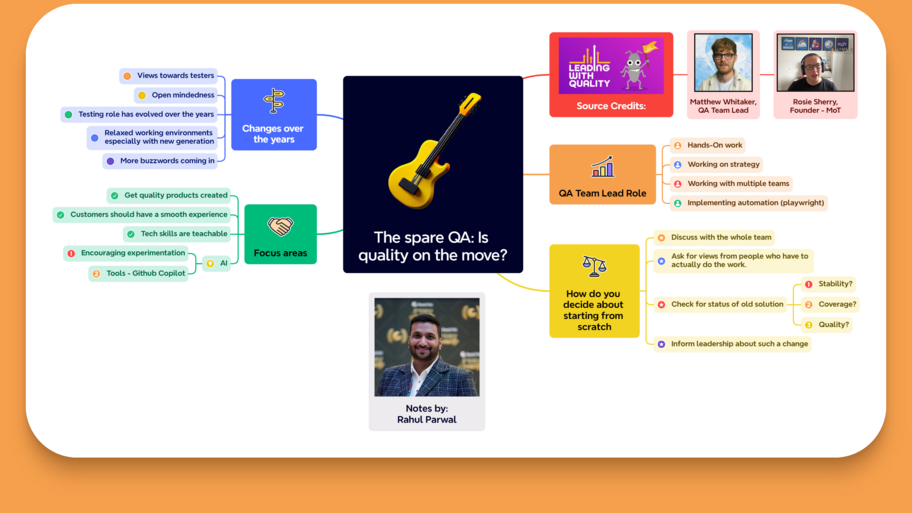
Notes of key moments and learnings from Leading with Quality - Podcast, where the guest was Matthew Whitaker.
You can watch the podcast series here: https://www.ministryoftesting.com/collections...
28 Aug

I am incredibly proud to say that I was featured on Ministry of Testing The Testing Planet yesterday! 🧪✨ The whole episode was truly insightful, and it was an honour to be part of such a great plat...
30 Jan

Understand why test data management is a more complex and impactful challenge than test automation itself, and how to address it through better ownership, tooling, and data practices.
9 Jun
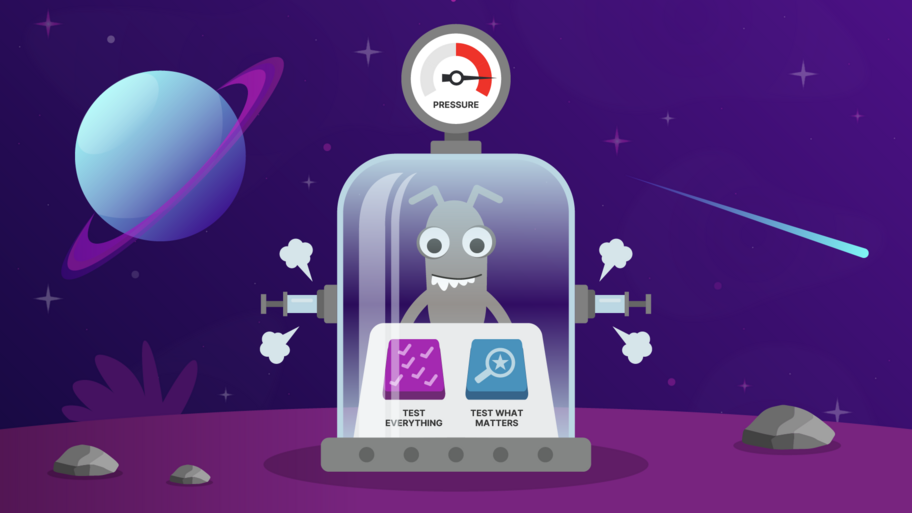
Implement lean testing strategies that enable small teams to deliver high-quality software efficiently within resource-constrained environments.
6 May

See how how role titles, team trust, and a strategic ‘spare QA’ help scale quality across legacy systems and ways of working
24 Jul

Join Simon Tomes and his team of reporters for another round of news
5 Feb
Synthetic Data
Synthetic Data refers to artificially generated data that is created to replicate the structure and patterns of real world data without containing actual personal or sensitive details. Synthetic data is designed to behave like real life data which in turn makes it more useful for testing, analysis, training and development purposes whilst reducing privacy and security risks. Organisations often use synthetic data in areas such as testing, cybersecurity, machine learning and research where realistic datasets are needed but using real life customer or even employee information could create compliance or confidentiality concerns. An example would be that a company may generate synthetic customer records to test a new system instead of exposing genuine PII.As this does not directly identify real individuals, synthetic data can help organisations improve innovation and collaboration while supporting data protection requirements such as GDPR. However synthetic data still needs to be carefully created and managed to ensure it accurately reflects real world scenarios and does not unintentionally reveal sensitive information.
GDPR (General Data Protection Regulation)
This is a data protection law that was introduced by the EU (European Union) to give individuals more control over how their personal information is collected, stored and used by companies. GDPR sets out clear rules for businesses and public bodies on handling personal information responsibly, securely and transparently. Under GDPR companies must ensure that PII is only collected for legitimate purposes, kept securely and not stored for longer than necessary. Individuals are also given a variety of rights, including the right to access their data, request corrections, ask for information to be deleted in certain circumstances and understand how their data is being used. The regulation applies to any organisation that processes the personal data of people within the EU and UK, regardless of where the organisation itself is based.
Tokenisation
This is related to the process of replacing sensitive information such as credit card numbers, bank details or personal data with a unique value known as a token. The token itself has no meaningful value outside of the specific system that is has been created for, this means that even if it is intercepted or accessed by an unauthorised party, the original data remains protected. Tokenisation is commonly used in cybersecurity, digital payment systems and data protection practices to reduce the risk of fraud and data breaches. An example of this would be when a customer makes an online payment the actual card details will be replaced with a token before being stored or transferred. This allows businesses to process transactions securely without exposing sensitive information directly.By limiting how often real data is handled or stored, tokenisation helps organisations strengthen security, support compliance with data protection regulations and build greater trust with customers.
Anonymisation
Anonymisation is the process where a client or customers identity is protected by removing or changing personal information so that they cant be identified. This often includes details like names, addresses, dates of birth, phone numbers or anything that could be linked back to the person. It is often used when organisations need to use or share data without exposing the private information of these people. An example could be when a company is preparing for a migration and to aid development or help with the testing, using the clients data but without the personal information would be an ideal scenario as they will be able to copy the exact amount of data being migrated. The main aim is to keep peoples information safe whilst still allowing the data to be useful.
Cognitive load
Cognitive load refers to the amount of mental effort required to perform a task, including everything a tester must keep in mind while testing, such as requirements, system behaviour, test data, environments, tools, expected results, and potential failure modes. Cognitive load is often described in three different forms:
Intrinsic cognitive load: This comes from the inherent complexity of the system being tested. Distributed systems, complex business rules, edge cases, and integrations naturally demand more mental effort.
Extraneous cognitive load: This is unnecessary mental effort caused by poor tooling, unclear requirements, fragmented documentation, inconsistent environments, or inefficient processes. Unlike intrinsic load, this type is avoidable.
Germane cognitive load: This is the productive mental effort spent learning, problem-solving, and building mental models of the system. This is the load on which we want testers to spend their energy.
It would be impossible to eliminate cognitive load entirely. Instead, effective testing requires reducing extraneous load so testers can devote their finite mental capacity to meaningful analysis and exploration.
Comments
(1)
Lean testing under pressure: How small teams deliver high-impact quality in highly constrained environments
That is a great idea, what I will do is try and put my none graphic skills together and create something :)
Why Test Data Is the Unsung Hero of High-Quality Software — Especially in Finance
(www.linkedin.com)
03 Jun 25




Learner completed your lesson
2.2.0 of MoT Software Quality Engineering Certificate
Community Star
about 23 hours ago
Learner completed your lesson
2.2.0 of MoT Software Quality Engineering Certificate
Community Star
6 days ago
Learner completed your lesson
2.2.0 of MoT Software Quality Engineering Certificate
Community Star
7 days ago
Learner completed your lesson
2.2.0 of MoT Software Quality Engineering Certificate
Community Star
11 days ago
Learner completed your lesson
2.2.0 of MoT Software Quality Engineering Certificate
Community Star
19 days ago
