
Ady Stokes

Ady Stokes
Freelance Consultant
He / Him
MoT Ambassador. Currently semi-retired and freelancing. I am, amongst other things, a writer, speaker, and accessibility advocate. Leeds Chapter Lead. MoT Certs curator and article editor for MoT and WonderProxy. Testing wisdom, friendly, testing songs and poems. Great minds think differently. STEC and SQEC Certified.
🎂 MoTaBirthday | March 11, 2017
Open To
Write
Teach
Speak
Meet at MoTaCon 2026
Podcasting
Review Conference Proposals
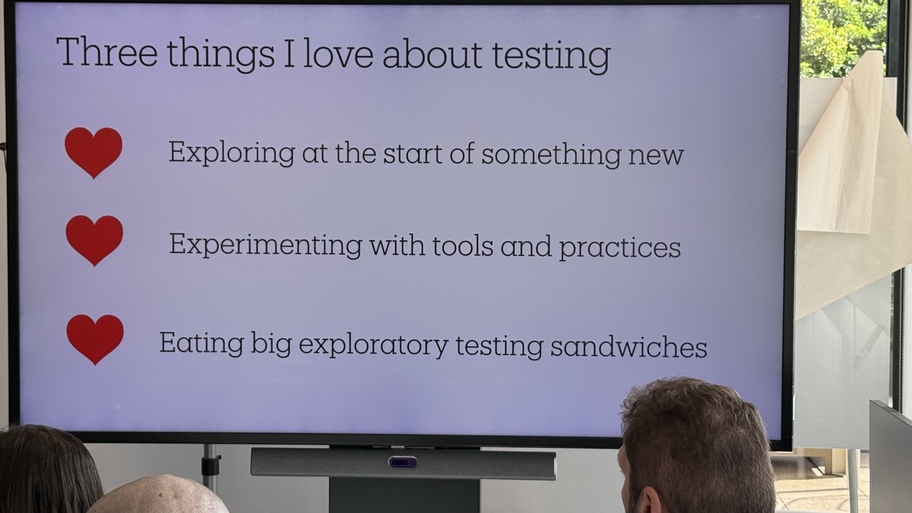
Ash Winter shared three things he loves about testing. The last triggers smugness mode!
8 Sep
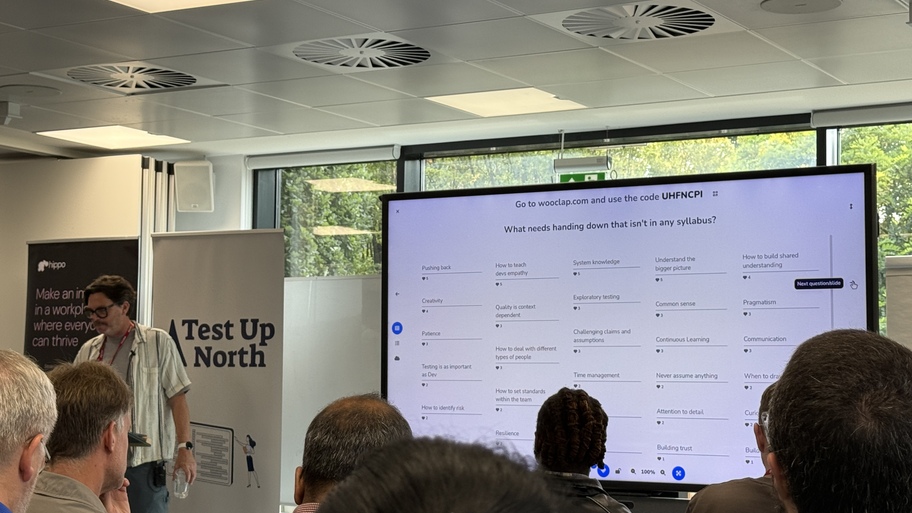
Test Up North. Crispin Reed of The Coders Guild gave a talk all about teaching testing. It was called ‘Who taught you to test?’ The second question was, what did they give you? There were some...
8 Sep
Excited to be heading to Leeds shortly for the excellent TestUp North Conference. I’m happy to be a sponsor and see my local community shine. Feeling spoiled with Testing Atelier on my doorstep too...
8 Sep
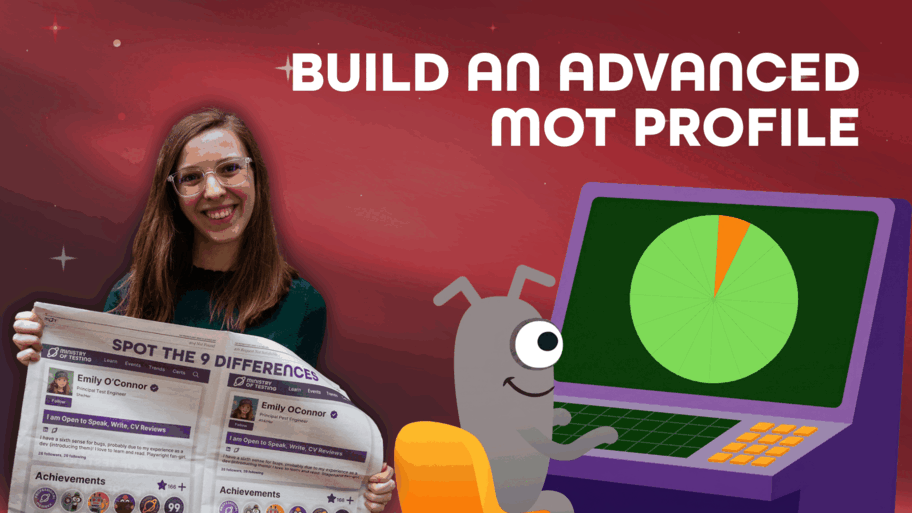
1,000 songs in your pocket changed how the world listened to music. The MoTaverse changes how tech professionals grow their careers.Sixteen features, sixteen stories, one thread running through al...
26 Aug
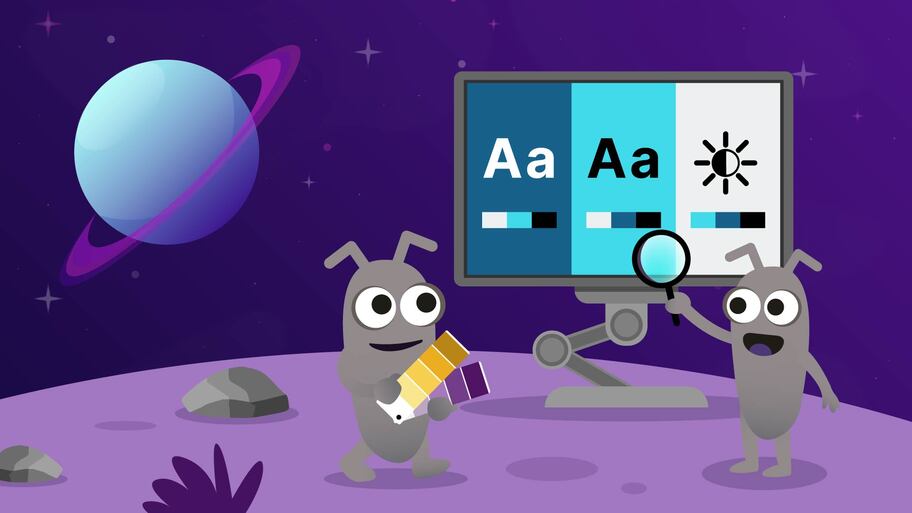
Modernise your design strategy with mobile-first and keyboard-centric approaches that create more resilient, accessible, and user-friendly software.
5 Mar
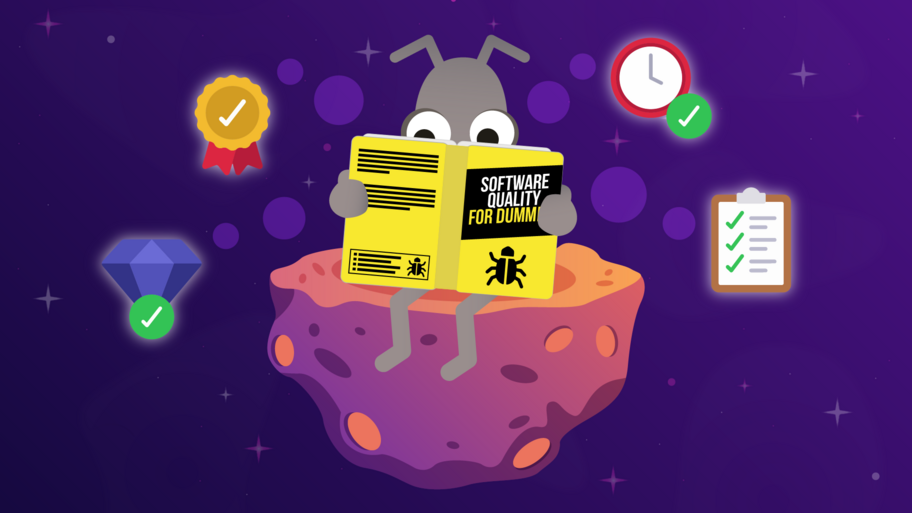
Transition from reactive quality assurance to proactive quality engineering by embedding shared responsibility throughout the entire development lifecycle
24 Feb
A 'good problems' episode about production-testing drama, MoTaverse growth, new voices, lifelong learning, and how community conversations help people keep going.
24 Jul
A celebratory 'wins' episode full of community milestones, personal breakthroughs, bug catches, career confidence, and the many small moments that keep the MoTaverse moving.
10 Jul
SWOT Analysis
Strengths, Weaknesses, Opportunities, Threats (SWOT). Four boxes, often in a grid. Can be used individually or for teams. I'd guess some of you have sat through a workshop where someone's drawn it on a whiteboard or handed out sheets, excited to discover root causes, gaps and productivity gains. So why does it so often end up as a box-ticking exercise, particularly for teams, rather than something genuinely useful? If it isn't familiar to you, you may have done something similar with 'What's going well, what's going wrong, and what could be better?' That and similar exercises are essentially watered-down versions of the original SWOT that came from the Stanford Research Institute in the 1960s.
Strengths and Weaknesses look inward. What are we good at, and where do we fall down? Opportunities and Threats look outward, at the world beyond the team or the product. That split matters more than it gets credit for. It's easy to fill the grid with things you already believe about yourself and never actually look deep inside. I'm the same. One done for me looks very different to one done as part of a team.
I've sat in sessions where the "weaknesses" box got suspiciously thin because nobody wanted to be the one writing something uncomfortable down in front of the boss. No one likes admitting weakness. No one likes openly criticising or questioning colleagues. But that's not a SWOT problem. That's a psychological safety problem.
In my opinion, it earns its keep first when you are honest, and then when it is used as a starting point for conversation rather than just an answer. Whatever is captured is worth nothing unless it is the truth, and until someone asks what we're actually going to do with that information.
Work in progress (WIP) and limits
Work in progress, or WIP, means exactly what it says. Work that's in progress. Started, not finished, sat somewhere in the middle. Simple enough, in theory. But there's more to it than that.
Where it gets interesting, or annoying, depending on your team, is WIP limits. That's a deliberate cap on how many things can be "in progress" at once, originating from Kanban and lean manufacturing. In my experience, most teams have a WIP problem because everyone's trying to help, everyone picks something up, and suddenly there are fourteen tickets half-finished and nothing actually shipped. Because busy isn't the same as done, is it?
A WIP limit forces a choice. Finish this thing, or you can't move on. I can't remember when I came across the saying "stop starting, start finishing". I believe it is an Agile principle, or it was originally linked to Kanban, but I'm not sure. What I do know is that for a long time I had a post-it note on my desk with it on, and it helped me focus on the work in front of me.
So next time your board's heaving with WIP, don't just ask what's blocked. Ask why so much got started in the first place and how we can improve the process.
Two Factor Authentication (2FA)
Two factor authentication, or 2FA, is a security process where a user provides two distinct forms of identification before gaining access to an account, system, or application.
In identity and access management (IAM) architectures, 2FA acts as a security gate within the authentication workflow, enforcing multi-layered defence.Authentication Factors look to combine two distinct pieces of information.
A knowledge Factor, which could be passwords, PINs, or secret answers.
A possession Factor, such as One Time Passcode (OTP), secondary apps e.g., Google Authenticator, Authy, etc.
An Inherence Factor is something you are. Your biometric data for Face ID, a fingerprint scanner, or even iris scans for secret agents or super villains!
For testing, you can mock 2FA endpoints in non-production environments to avoid dependencies on third parties. In automation, secret keys can work in test environments to generate valid OTP tokens within end-to-end UI tests. You can also implement conditional test configurations or feature flags (e.g., test-only OTPs or environment-level 2FA bypass) specifically for CI/CD pipeline runs.
OTP (One Time Passcode)
An OTP is an automatically generated and secure numeric or alphanumeric string of characters that authenticates a user for a single transaction or login session.
Unlike the usual run of the mill passwords you use to log in to a site or app, an OTP (One Time Passcode) is valid for one use only. They are sent to previously provided details such as a phone number or email address. They typically expire after a short duration. Something like 1 to 5 minutes is typical, but some can be 10 minutes. It serves as a second layer of defence in Two Factor Authentication (2FA) and Multi Factor Authentication (MFA). They can also come from authentication apps or be physical hardware tokens.
AI Artificial Intelligence
Artificial Intelligence is the broad science of making computers mimic human decision-making and problem-solving. It is a nested family of technologies. At the outer edge, you have general AI. Inside that, you find machine learning, where systems learn from patterns in data. At the very centre, you have deep learning. It tries to mimic the human brain using neural networks. AI is a powerful tool, but it is not a replacement for human thinking, nor is it ever likely to be. It is brilliant at finding patterns in mountains of data, giving simple answers to complex questions (context depending, of course), but it lacks common sense and empathy. Our job is to bridge that gap, ensuring that AI is safe and reliable.
Comments
(134)
Exciting to have WonderProxy once again at MoTaCon!
I believe there will be rather lovely British styled duck stickers. Hoping to take some back to Yorkshire for the Leeds Chapter.
Ady asks the MoTaverse #3
Thank you all for your thoughts
Mary's lamb is a trap
In my article, "I think therefore I test: The importance of thinking for testers," I covered this very saying. I was focused on the assumptions we make and how different mindsets can be used to question them.
https://www.ministryoftesting.com/insights/i-think-therefore-i-test-the-importance-of-thinking-for-testers
Journey Through the Stars
Keep up the awesomeness, but be kind to yourself while doing it
The "Happy Path" Gone Wrong
Excellent. No notes :)
27 Aug

Learner completed your lesson
2.6.0 of MoT Software Quality Engineering Certificate
Community Star
1 day ago
Learner completed your lesson
2.5.0 of MoT Software Quality Engineering Certificate
Community Star
1 day ago
Learner completed your lesson
1.4.0 of MoT Software Quality Engineering Certificate
Community Star
1 day ago
Learner completed your lesson
9.0.0 of MoT Software Quality Engineering Certificate
Community Star
1 day ago
Learner completed your lesson
9.6.0 of MoT Software Testing Essentials Certificate
Community Star
1 day ago
