
Aj Wilson

Aj Wilson
Quality Engineering Manager II / Technical Development Lead / Chief Quality Officer/ Digital Test Manager
She/Her
Intellectual (non practicing)| Neurospicy | UN Women Delegate | Above all Curious; Challenging - Quality and Tech Leadership for 20+ years.
🎂 MoTaBirthday | March 23, 2018
Open To
Write
Teach
Speak

Thinking back to a call in Feb where a CITo/CTO forgot he was not muted and said 'AI can do the software testing - we can save a fortune!"
30 Aug
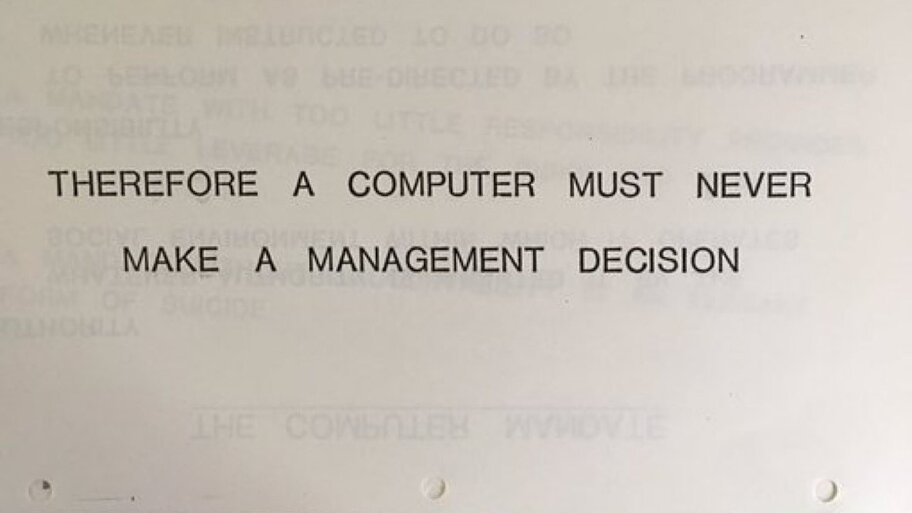
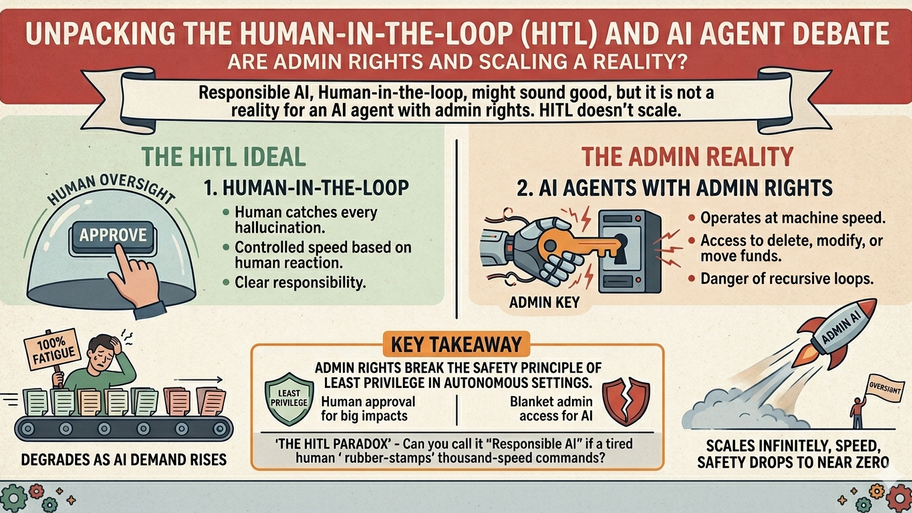
You cannot claim a system is or uses "Responsible AI" just because there is a human button-pusher. If the system is designed to move faster than that human can think, how do you prevent your busine...
30 Apr
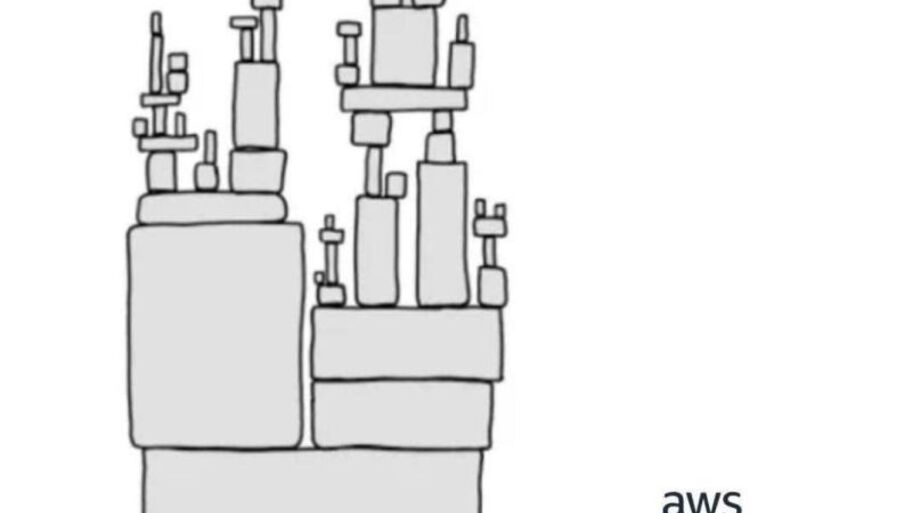
Cloudflare went down again today and half the internet with it. Nothing like a global outage to remind us that we're all just one code or config change away from cup of tea time chaos.
19 Nov

Is the future of test case management at risk? Let's go exploring.
28 May

63% of you were not aware of the existence of the Staff Quality Engineer role
24 Apr

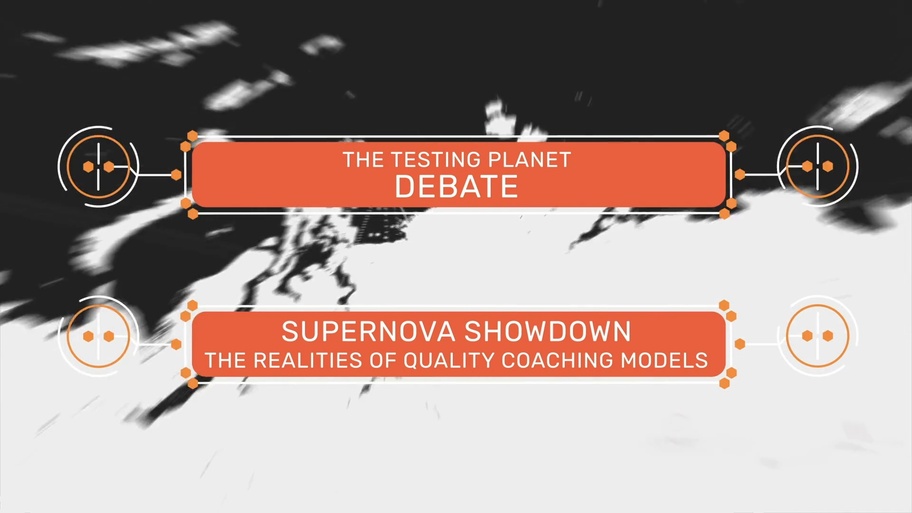
This debate explored the role of quality coaching, how it differs from quality engineering and where it is most effective
1 Apr
SWAG Estimate
SWAG (Scientific Wild Ass Guess): A high-level estimation technique used by 'Heads Of' and Test Managers of various levels, to provide an early indication of testing effort, duration, resource requirements, cost, or scope when detailed requirements, plans, or designs are not yet available. SWAG estimates are based on professional experience, historical delivery data, expert judgement, assumptions, and known risks rather than detailed analysis.
SWAG estimation asks: "Based on what we know today, what is a reasonable estimate?" Test Managers use SWAG estimates to support early planning, budgeting, resourcing, release forecasting, and stakeholder discussions. The goal is to provide a pragmatic indication of the likely testing demand while acknowledging uncertainty and potential change. Often used in Annual or Quarterly planning of incoming work.
This is the step before detailed test estimation, where it asks: "What can we accurately forecast based on defined scope and evidence?" Estimates are created using detailed requirements, test scope, complexity assessment, dependencies, resource availability, environments, defect history, and delivery schedules. The goal is to provide a more accurate and reliable forecast for planning and delivery commitments.
A SWAG estimate should not be treated as a delivery commitment. It is intended to inform decision-making and facilitate planning conversations until sufficient information is available to produce a detailed and evidence-based test estimate. As scope, requirements, and delivery plans mature, SWAG estimates should be reviewed, refined, and replaced with more accurate forecasts.
Stakeholder-Driven Testing
Stakeholder-Driven Testing: A testing approach in which test scope, priorities, scenarios, and acceptance criteria are shaped by the needs, risks, expectations, and business goals of key stakeholders, ensuring testing focuses on the outcomes that matter most to users, customers, sponsors, and operational teams.Stakeholder-Driven Testing asks: "What matters most to stakeholders?" specifically. Testing is prioritised according to stakeholder needs, concerns, expectations, and objectives. The goal is to provide confidence in the areas stakeholders consider most important.Risk-Based Testing asks: "What could go wrong?" which can involve stakeholder input but - Testing is prioritised according to the likelihood and impact of risks. The goal is to focus effort where failures would cause the greatest business, technical, operational, or compliance impact.However, stakeholders may also prioritise areas that are not high risk but (said in a Scottish accent) are high visibility, strategically important, or critical to user/player experience.See also: Stakeholder (in Software Development) | MoTaverseRisk-based testing | MoTaverse
Obfuscation
Obfuscation is the process of replacing sensitive information with data that looks like real production information, making it useless to malicious actors. People often confuse Anonymisation & Obfuscation, they are both data protection methods, but they differ in reversibility, purpose, and legal standards. Anonymisation permanently removes all personal identifiers from a dataset so that individuals can no longer be identified. Obfuscation alters the data's format or replaces it with fictional values (using methods like masking, encryption, or shuffling) to hide original information, though some forms remain reversible or readable by the systemKey Differences checklist ㊙️
Reversibility: Anonymisation is permanent and irreversible; obfuscation can often be reversed by authorised parties using a key or code.
Primary Goal: Anonymisation aims to completely sever the link to an individual for strict privacy compliance; obfuscation aims to deter casual observation or protect data during development and testing.
Regulatory Status: True anonymised data is exempt from strict laws like the GDPR because re-identification is impossible; obfuscated data is often still regulated as sensitive or personal data.
Use Cases: Anonymisation fits open data sharing and public research; obfuscation fits software/quality engineering, internal analytics, and staging environments.
Anonymisation
Anonymisation is the process of irreversibly removing or encrypting personal identifiers, such as names, addresses, and ID numbers from a dataset. The goal is to protect individual privacy while allowing the remaining data to be safely used for software testing.How it works: It involves techniques like generalisation (broadening details), masking (redacting), or adding random "noise" to the data. True anonymisation is irreversible. Once processed, it is nearly impossible to trace the data back to an individual.
Why it matters: Anonymised data falls outside the scope of strict data privacy laws (such as the EU GDPR) because it no longer relates to an identifiable person.
Velocity
Velocity is a metric used to track the rate of progress in software development. For testers, the term carries two distinct meanings that impact how quality and timelines are managed.1. The Agile Metric (Operational)In standard Agile practices, velocity is the total number of story points a team completes during a sprint.For Testers: It serves as a capacity planning tool. A spike in velocity without a corresponding increase in team size often signals "testing debt," where speed is prioritised over thorough validation or regression testing.2. The AI/Market Narrative (Strategic)In the current "AI-first" landscape, velocity refers to the overall speed of deployment and organisational pivot.For Testers: This is often viewed critically as "speed over direction." High organisational velocity can lead to "accelerated chaos" if the testing infrastructure - automated suites, environments, and safety rails - isn't scaled to match the increased deployment frequency.
Comments
(9)
Who is hiring? [September 2026]
I will be hiring very soon - and taking a different approach to advertising. It won't be on Indeed or Reed - but more weighted towards sites that focus on hiring and being hired with a technical lense. I will unfortunately have to list on LinkedIn but will tag MOT as soon as I do and share in Slack for Pro members. I do not care about automation skills, we can support that in your career compass if that is an interest. I care about Quality, the Value it brings and the person being able to answer Generalist QE and Technical questions. Watch this space and follow me for notifications.
How I built a PR dashboard that flags risky pull requests
Progress over Perfection for the win! This is a great example of using data to drive better engineering conversations rather than just reporting status. The RAG indicator is a useful prompt for discussion, and I like that it focuses attention on risk, test coverage, and review effort without pretending to be a perfect quality metric. Thank you for sharing.
LGBTQIA+ Pride Month — Visibility matters: You are not alone
thank you for repeatedly empowering and educating
Possibly late to the party, but something I couldn't pass up
tried the same prompt - despite using it for a long time it still assumed I was a man lol because of my "masculine name".
What's your AI name?
AiJ
(pronounced Age)
* which is also the Artificial Intelligence Journal
*Math - (\(a_{ij}\))
*Architectural Institute of Japan
*Architectural Ironmongery Journal
Self-spreading GlassWorm malware hits OpenVSX, VS Code registries
(www.bleepingcomputer.com)
28 Oct 25




Not registered for any upcoming events
Learner completed your lesson
2.3.0 of MoT Software Quality Engineering Certificate
Community Star
2 days ago
Learner completed your lesson
2.3.0 of MoT Software Quality Engineering Certificate
Community Star
4 days ago
Inspired conversations
Loving your definition of a SWAG estimate, it brought a smile to my face 😏
Community Star
4 days ago
Who needs Chat-GPT when you have MoT-GPT
A discussion on TWIT had me wondering what 'Grey Box Testing' was.
Luckily, some lovely people were on hand to answer my question!
Contributor thanking
5 days ago
